Vaginal breech birth (VBB), where a baby is born bottom or feet first, is becoming increasingly accepted as a safe option for some women when supported by skilled professionals. However, there’s still uncertainty about what happens if labour needs to be started or “induced.” Because there isn’t much evidence about the risks and benefits of induction of labour (IOL) for breech babies, many clinicians remain cautious. This can limit women’s choices and could potentially lead to some women making unsafe decisions, especially when birth needs to be brought forward for medical reasons.
This webinar will share findings from a recent systematic review which looked at what is currently known about the safety of inducing labour for women with a breech baby at term. It compared outcomes with:
Women who went into labour spontaneously
Women who had a planned caesarean when earlier birth was advised
Women with a head-down (cephalic) baby who had labour induced
I’ll share what the research tells us, and where the gaps still are. We’ll open the conversation to explore what further research is needed, and how both women and professionals can work together to shape safer, more informed choices for breech birth in the future.
The term “women” is used here in relation to biological sex. We recognise and respect that people of diverse gender identities also give birth, and we aim to include and welcome everyone with lived experience of pregnancy and birth in this discussion.
Everyone is welcome, whether you’re a parent, birth worker, midwife, obstetrician, researcher, or simply interested in supporting informed decision making in maternity care.
The OptiBreech research study closes this month, but we hope to be back again in the future.
Thank you to everyone who has been in touch to ask how you can help make sure OptiBreech research carries on. We have been incredibly moved by your support. For those of you who would like to do something to make a difference, you can let these organisations know that you feel this should be a research priority:
After many months of hard work, the OptiBreech pilot and feasibility work is finally drawing to a close at the end of January. This is the planned closing date, defined by the length of our funding for pilot and feasibility work (Shawn’s NIHR Advanced Fellowship). In fact, with the support of the Trial Steering Committee, we kept the observational arm of the study open for several months longer than originally planned, in order to monitor outcomes for sites that were continuing to offer OptiBreech care.
You can access all of our publications on this site, and we will update with the remaining few we are working on.
Thank you for all of your support! We are especially grateful to all of the women and birthing people who have participated in our study and allowed us to collect data about their births.
Unfortunately, our applications for further funding were unsuccessful. That means that we cannot at this time proceed to a substantive / full trial. Therefore, we will stop collecting data for the moment, and try again this year. We’re grateful for the women and clinicians who helped to inform our project proposals, which included:
If you think, as we do, that we need to continue evaluating the outcomes of OptiBreech care to make vaginal breech birth safer and easier to access for all women, not just those privileged with resources and social support to surmount resistance to this choice — now is the time to share your views. The RCM is inviting views on Midwifery practice and maternity care in the UK. You can share what matters to you, whether this is breech or any other topic.
Most OptiBreech sites will continue to offer support for planned vaginal breech births. For those of you who have told us that you intend to try to start an OptiBreech service anyway, we will support you to the best of our ability. Below are some resources.
Avni Batish and Kate Stringer, photo by George Haroun
On May 8th, we will be holding an on-line meeting to establish a consensus on short-term outcomes in our Breech-COS study. We invite anyone with an interest to attend. Book here to attend.
All invited to this participatory research webinar, where we will share findings from our qualitative research and invite you to shape our interpretations!
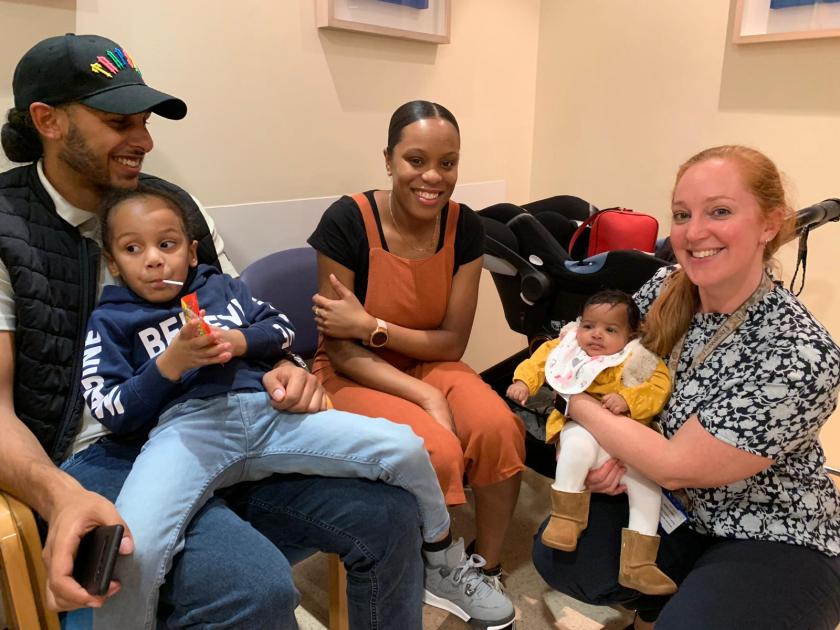
Sharna, Cianna, their family and their midwife, Anne
In this participatory research webinar, we will share the results of two of the OptiBreech qualitative research projects. We invite all stakeholders (participants, women & birthing people, clinicians, service leaders and policy makers) to reflect on our findings with us and shape the interpretations we will summarise in our papers’ discussions.
Work will be presented by Research Assistants Honor Vincent and Alice Hodder, along with our PPIE Lead, Sian Davies. Abstracts of the two papers are below. If you have contributed to the research (clinicians and research staff), you will receive a copy of our draft paper and an invitation to make comments and/or recommendations for revisions.
If you are a stakeholder, we invite you to share your views in the meeting chat, raise them when we open the meeting for discussion or send them directly to a member of the research team.
For all sites that have expressed an interest in our planned stepped wedge trial of OptiBreech collaborative care: please include your name and hospital in the webinar chat, and we will award one site selection point for every site that participates.
Barriers and facilitators for team implementation of OptiBreech collaborative care
Introduction: Increased rates of caesarean section for breech presentation and lack of training have reduced professional experience and expertise in supporting vaginal breech birth. OptiBreech collaborative care is a care pathway that aims to enable maternal choice and improve training opportunities for maternity professionals, through dedicated clinics and intrapartum support. In feasibility work, barriers and facilitators to team implementation were observed by team members. This study seeks to describe these factors to optimise future implementation of OptiBreech collaborative care.
Methods: Semi-structured interviews were conducted with staff members at OptiBreech trial sites (17 midwives and 4 obstetricians, n=21), via video conferencing software. A Theoretical Domains Framework (TDF) was used to identify factors impacting team implementation. Themes identified in the TDF were refined in reflective discussion and grouped into key facilitators, key barriers, and dynamic factors (which span both barriers and facilitators). The interviews were then coded, analysed and interpreted according to the refined framework.
Results: The key facilitators were broadly categorised within skill development, beliefs about capabilities and social support from the wider multidisciplinary team. Key barrier categories were resources, social obstacles and fears about consequences. Dynamic factor categories were individual responsibility, training and practice.
Conclusions: While some factors affecting implementation were specific to the individuals and cultures of certain trusts, recommendations emerged from analysis that are more broadly applicable across multiple trusts. These should be considered going forward for future trust implementation in the next stage of clinical trials.
The OptiBreech Trial feasibility study: a qualitative inventory of the roles and responsibilities of breech specialist midwives
Background: The safety of vaginal breech birth (VBB) is associated with the skill and experience of professionals in attendance, but minimal training opportunities have led a to a lack of willingness to support these births. OptiBreech collaborative care is a pathway designed to support maternal choice and professional training, through dedicated breech clinics and intrapartum support. In feasibility work for the OptiBreech Trial, these were usually co-ordinated by a key midwife on the team, functioning as a specialist.
Objective: To describe the roles and tasks undertaken by breech specialists in the OptiBreech 1 study (NIHR300582).
Methods: Semi-structured interviews were conducted with OptiBreech team members (17 midwives and 4 obstetricians, n=21), via video conferencing software. Template analysis was used to code, analyse, and interpret data relating to the roles of the midwives delivering breech services. Tasks identified through initial coding were organised into five key themes in a template, following reflective discussion at weekly staff meetings. This template was then applied to all interviews to structure the analysis.
Results: Breech specialists as change agents emerged as important in multiple settings; each fulfilled similar roles to support their teams, whether this role was formally recognised or not. In this study, this role was most commonly described as fulfilled by midwives, but some obstetricians also functioned as specialists. We report an inventory of tasks performed by breech specialist midwives, organised into five themes: Care Planning, Clinical Care, Education and Training, Service Development, and Research.
Conclusions: Breech Specialists perform a consistent set of roles and responsibilities to co-ordinate care throughout the OptiBreech pathway. The inventory has been formally incorporated into the OptiBreech collaborative care intervention. This detailed description can also be used by employers and professional organisations who wish to formalise similar roles to meet consistent standards and improve care.
The second round of our consensus-building activity to establish a core outcome set for breech birth studies is now open. This will establish a standard set of outcomes and their definitions that ALL breech birth studies will collect, so that we can compare the results.
We have sent personal invitations to all previous participants but are also opening this round to new participants.
You can participate here. You are welcome to forward this post to anyone else who may be interested. The results will inform a consensus meeting discussion to take place in the spring. This will be open to the public and announced later this year.
We invite participants from the following stakeholder groups:
Service user (you or your partner has experienced a breech pregnancy)
midwife
obstetrician
neonatologist
paramedic
anaesthetist
health researchers
health service manager
healthcare commissioner
health economist
statistician
support group representative
Example of results from the first round on the outcomes of intrauterine death/stillbirth and cord clamping < 1 minute after birth.
Investing in staff and their skill development will achieve the same, if not better, results and should be the priority.
This a response to a recently published report in PLOS Medicine suggesting that implementation of universal third trimester ultrasound scanning in pregnancy improves outcomes for babies and mothers.
The following contributors have approved this expression of concern:
Researchers and Clinicians:
Shawn Walker, Researcher in Residence and Honorary Consultant Midwife, Imperial College Healthcare NHS Trust
Emma Spillane, Deputy Director of Midwifery and OptiBreech Lead, Kingston Hospital NHS Trust, London
Sabrina Das, Consultant Obstetrician and OptiBreech Lead, Imperial College Healthcare NHS Trust
Philippa Corson, Consultant Obstetrician and Breech Clinic Lead, Royal London Hospital, Barts Health NHS Trust
Susan Bewley, Emeritus Professor of Obstetrics & Women’s Health, King’s College London
OptiBreech Patient and Public Involvement Leads:
UK researchers have an ethical obligation to involve service user groups in design and interpretation of research studies
Siân Davies
Nimisha Johnstone
Norfolk and Norwich University Hospital Maternity Voices Partnership Service User Representatives:
Lisa Brophy
Marion Frey-Alqurashi
Rachel Graveling
Siobhan Ridley
Evelyn Shadlock
Knights et al1 confidently demonstrate that routine third trimester, including point-of-care ultrasound (POCUS) performed by midwives, can significantly reduce undiagnosed breech presentation in labour. This is welcome, as women find diagnosis of breech presentation in labour traumatic, regardless of the outcome.2 Although the considerable psychological impacts were not discussed, all should support the plan to increase safety, choice and personalised care through better antenatal detection of breech presentation.
However, the authors then assert that, “Short-term adverse perinatal outcomes, including [neonatal unit] admission and low Apgar scores, were significantly lower for the pregnancies with diagnosed breech presentation at term following a policy for screening by either routine third trimester scan or POCUS.” This was despite no evidence given that any neonatal outcome achieved a statistically significant improvement. Indeed, hypoxic ischemic encephalopathy (HIE) increased from 0.3% to 0.4% in the St Georges University Hospital (SGH) cohort. The authors then ran Bayesian log-binomial regression models mostly using data from a previous evaluation of the same intervention on a different population (Salim et al),3 falsely concluding that there was a high probability the intervention would reduce adverse outcome rates.
Oxford’s implementation data
The publicly available data for the Salim et al study (S1 Data. Study data set)3 indicate that eight cases of serious neonatal morbidity (HIE and/or death) occurred:
In six (75%) Oxford cases, the breech presentation was identified antenally. In 1/2 (50%) undiagnosed cases, a presentation scan would not have prevented the breech labour, which occurred at 37+2 weeks gestation. In both cases of death, the breech had been diagnosed clinically and the women had been seen in breech clinic. In two additional diagnosed cases, the breech service worked exactly as it was intended; two successful ECVs were performed. Nonetheless, HIE occurred following these cephalic births.
The total potential benefit in Oxford was a reduction of two cases of HIE and two less NICU admissions with Apgar <7 at 5 minutes without HIE, i.e. 44 versus 40 neonatal composite adverse outcomes in 1052 third trimester breech presentations, at a cost of 7,673 additional scans and 65 additional ECV procedures.
Norwich charity funding
Knights et al1 do not explain that Norfolk and Norwich University Hospital (NNUH) spent £100,000 of NNUH Hospitals Charity funding4 on handheld ultrasound scanners. The results in their cohort (Table 4) indicate two fewer neonatal admissions and one less case of Apgar score <7 at 5 minutes after implementation. Neither of these would have been considered a serious adverse outcome in the Term Breech Trial5 nor PREMODA study.6 Thus, there is no causative evidence of improvement, nor is this strategy is likely to prove cost-effective for implementation at scale.
St Georges’ specialist service
Knights et al failed to even look for confounding factors, let alone control for them – a serious source of bias in retrospective studies (see item 7 in the STROBE checklist, ‘Variables’).7 Yet, during their study time frame, and known to the authorship team, SGH also participated in a prospective multi-centre evaluation of physiological breech birth training, the results of which were already published in 2021.8 Both Knights and Mattiolo report a similar number of vaginal breech births, 64 (49 before and 15 after) and 90 (37 before and 53 after) respectively. Mattiolo et al also report outcomes for actual vaginal breech births. Among births where there was no attendant who had completed the enhanced training present, the severe neonatal composite adverse outcome rate was 5/69 (7.2%). Among births attended by someone who had completed the enhanced training, in the same settings, it was 0/21 (0%).
Between 2017-2020, overlapping with the implementation of the scanning programme, a specialist clinic and intrapartum care service for women requesting a vaginal breech birth were implemented at SGH.9 After 100 doctors and midwives had received a whole day’s training, the internal guideline was updated to include a physiological breech management algorithm.10 This was incorporated into monthly mandatory training to all staff, introducing substantial changes to vaginal breech birth practice. All obstetric trainees received half-day training. New joiners received the whole-day training repeated 6-monthly. By 2019, the rate of planned VBB had increased from 1.3% to 12.3% of all births in breech presentation.11 Internal audit of this service demonstrated substantial reduction in the emergency caesarean birth rate, from 42.9% to 24.8% of all births in breech presentation.11
The specialist service at SGH was discontinued when the breech specialist midwife (Spillane) relocated in 2020 and was not replaced. Nevertheless, the potential confounding effects need to be considered. When services invest in staff skill development, those effects extend beyond each individual birth.12
A specialist intrapartum service was also implemented at Oxford during the Salim et al. study,13 with the ‘dedicated on-call team’ for vaginal breech births publicly advertised on the hospital website.14 This is a significant difference in practice compared to most NHS units (except OptiBreech sites). Among the breech presentations >37 weeks with labour, planned vaginal breech births increased from 7.4% (12/162) to 17.6% (21/98) after the introduction of universal scanning. The provision of this team also appeared to improve the safety of the actual vaginal breech births that occurred.
Admission to NNU
Apgar <7 at 5
HIE
Perinatal mortality
Planned VBB
2/16 (12.5%)
0/16 (0%)
0/16 (0%)
0/16 (0%)
Unplanned VBB
7/42 (16.7%)
3/42 (7.1%)
5/38 (13.2%)
2/42 (4.8%)
Secondary analysis of publicly available data from Salim et al
The differences between planned and unplanned VBB are comparable to Mattiolo et al.8 Could the authors use these data in Bayesian log-binomial regression models to demonstrate the beneficial effect of implementing breech birth teams? We cannot assume that similar results would occur in settings that do not offer a similar service.
Summary
The opportunity to access a third trimester presentation scan remains important, especially for women planning an out-of-hospital birth. But women find it psychologically distressing and dehumanising to be unable to access skilled support for a vaginal breech birth, both antenatally and in labour.15–17 Unless an evidence-based plan for improving this support is in place, matters will never change. When we prospectively evaluated the implementation of breech teams,15 one in five participants transferred from their original booking hospital to access supportive care for a vaginal breech birth.18 Some of these women came from SGH (since this VBB service is no longer available) and NNUH (approximately three hours car drive from the nearest OptiBreech site). Further unanticipated risks are introduced for women whose babies are diagnosed as breech but who cannot access their preferred mode of birth locally. More inequalities are created among women for whom the required travel and self-advocacy is impossible.
Determining which interventions improve clinical and cost-effectiveness outcomes for term breech pregnancies requires properly powered, prospectively registered, randomised controlled trials with publicly available, pre-specified protocols and anonymised data sets. It is extraordinary that £100,000 of charitable money was spent on equipment alone, outside the context of carefully planned research, and without service user involvement in priority setting. This has merely resulted in a poor-quality publication and plenty of mass media soundbites.4,19,20 Currently, many NHS sites lack the funding for trained staff to offer all needed care options (ECV, VBB and ELCB) that are currently recommended in RCOG21 and NICE guidelines.22,23 Investing in staff and their skill development will achieve the same, if not better, results and should be the priority.
Investing in staff and their skill development for vaginal breech births will achieve the same, if not better, results than universal third trimester ultrasound scans and should be a priority. @optiBreech@MidwifeSpillanehttps://t.co/AVmvWbCFsJ
Knights S, Prasad S, Kalafat E, et al. Impact of point-of-care ultrasound and routine third trimester ultrasound on undiagnosed breech presentation and perinatal outcomes: An observational multicentre cohort study. PLoS Med. 2023;20(4):e1004192. doi:10.1371/journal.pmed.1004192
Lightfoot K. Women’s Experiences of Undiagnosed Breech Birth and the Effects on Future Childbirth Decisions and Expectations. DHealthPsych. University of the West of England; 2018. http://eprints.uwe.ac.uk/33278
Salim I, Staines-Urias E, Mathewlynn S, Drukker L, Vatish M, Impey L. The impact of a routine late third trimester growth scan on the incidence, diagnosis, and management of breech presentation in Oxfordshire, UK: A cohort study. Myers JE, ed. PLoS Med. 2021;18(1):e1003503. doi:10.1371/journal.pmed.1003503
Hannah ME, Hannah WJ, Hewson SA, Hodnett ED, Saigal S, Willan AR. Planned caesarean section versus planned vaginal birth for breech presentation at term: a randomised multicentre trial. The Lancet. 2000;356(9239):1375-1383. doi:10.1016/S0140-6736(00)02840-3
Goffinet F, Carayol M, Foidart JM, et al. Is planned vaginal delivery for breech presentation at term still an option? Results of an observational prospective survey in France and Belgium. Am J Obstet Gynecol. 2006;194(4):1002-1011. doi:10.1016/j.ajog.2005.10.817
Vandenbroucke JP, Von Elm E, Altman DG, et al. Strengthening the Reporting of Observational Studies in Epidemiology (STROBE): explanation and elaboration. PLoS Med. 2007;4(10):1628-1654. doi:10.1371/JOURNAL.PMED.0040297
Mattiolo S, Spillane E, Walker S. Physiological breech birth training: An evaluation of clinical practice changes after a one‐day training program. Birth. 2021;48(4):558-565. doi:10.1111/birt.12562
Spillane E, Walker S. Case study supporting continuity of care models for breech presentation at or near term. Pract Midwife. Published online 2019:36-37.
Spillane E, Winstanley C, Swer M. Breech. St George’s Hospital Practice Guideline; 2019.
Spillane E. St George’s Breech Clinic – Results. In: Physiological Breech Birth Training [Online]. Breech Birth Network; 2020. Accessed April 18, 2023. https://vimeo.com/486516151
Walker S, Parker P, Scamell M. Expertise in physiological breech birth: A mixed-methods study. Birth. 2018;45(2):202-209. doi:10.1111/birt.12326
Dasgupta T, Hunter S, Reid S, et al. Breech specialist midwives and clinics in the OptiBreech Trial feasibility study: An implementation process evaluation. Birth. 2022;00:1-10. doi:10.1111/birt.12685
Morris SE, Sundin D, Geraghty S. Women’s experiences of breech birth decision making: An integrated review. Eur J Midwifery. 2022;6(January):1-14. doi:10.18332/EJM/143875
Petrovska K, Watts NP, Catling C, Bisits A, Homer CS. ‘Stress, anger, fear and injustice’: An international qualitative survey of women’s experiences planning a vaginal breech birth. Midwifery. 2017;44(0):41-47. doi:10.1016/j.midw.2016.11.005
Walker S, Spillane E, Stringer K, et al. The feasibility of team care for women seeking to plan a vaginal breech birth (OptiBreech 1) – an observational implementation feasibility study in preparation for a pilot trial. BMC Pilot & Feasibility Studies. 2023;In Press.
Impey L, Murphy D, Griffiths M, Penna L, on behalf of the Royal College of Obstetricians and Gynaecologists. Management of Breech Presentation. BJOG. 2017;124(7):e151-e177. doi:10.1111/1471-0528.14465
Read why our collaborators would like to help extend the provision of OptiBreech care by participating in a cluster trial.
As we prepare our funding bid to scale up OptiBreech care around the UK and evaluate it in a stepped wedge cluster trial, we have invited NHS sites to formally express an interest in collaboration. We are pleased to share some of our collaborators and the reasons they are joining this trial.
Walsall Healthcare NHS Trust
Lead: Joselle Wright, Head of Midwifery
“We are a smaller DGH with 3700 births, smaller units often do not get the opportunity to participate in these amazing research studies. This would be a great opportunity for our women.”
Shrewsbury and Telford NHS Trust
Lead: Dr Olusegun Ilesanmi, Consultant Obstetrician
‘Research within our Trust is important as this enables us to ensure we provide up to date evidence based safe care, with Women & their babies at the centre. The Opti Breech Study promotes informing Women about their options and to plan their care with them rather than making decisions about them, as well as improving our expertise, knowledge, and staff development. We look forward to giving Women within our care the opportunity to be part of the Opti Breech Study’
Maidstone and Tunbridge Wells NHS Trust
Lead: Charlotte Gibson, Consultant Midwife
Maidstone & Tunbridge Wells OptiBreech Team-to-be a the RCOG, May 2023
‘This is an exciting opportunity for us to support women’s health research which will positively impact those who provide care, the service we are able to offer and ultimately optimise health and well-being outcomes for those we care for. All with the added and far-reaching benefit of growing and strengthening our clinical research culture and capabilities within our service, community and beyond. It was from women’s and families lived experiences that led us to embark on setting up a Breech Birth Faculty. Our aim is to build the capabilities and confidence within our workforce to support safe and personalised care for those who have a breech baby at term. Collaborating with the Opti Breech Trial will be fundamental in achieving this aspiration.‘
West Hertfordshire Teaching Hospitals NHS Trust
Lead: Claire Church, Consultant Midwife
“We would like to get involved in Optibreech so that we can offer a comprehensive, standardised service to our women and birthing people with breech babies which ensures that they are all counselled in the same way and given informed choice regarding their options. We also want to provide our staff with the skills and competencies to support our women and birthing people with their choices and feel confident in doing so”. – (Clare Church. Consultant Midwife)
North Tees and Hartlepool NHS Foundation Trust
Lead: Kirsty Farrington, Sharon Gowans and Julie Woollaston – Research Midwives
‘We are really excited to be involved in this research! It is a great opportunity to not only work towards delivering evidence-based care for women but also to develop skills and build confidence within the whole maternity workforce.’
NHS Lothian, Royal Infirmary of Edinburgh
Leads: Rosemary Townsend and Andrew Brown, Consultant Obstetricians
Wirral University Teaching Hospital
Lead: Consultant Midwife Angela Kerrigan
It will be fantastic to be involved in the Optibreech trial as it will offer additional skills to our staff to enable us to provide an enhanced service to women who present with breech presentation at Term through the Optibreech collaborative care pathway. This is really a exciting trial to be involved in that has the potential to positively influence the care of women with babies presenting breech at Term.
Wrightington, Wigan and Leigh Teaching Hospitals NHS Foundation Trust
These principles underpin the new JRCALC guidance on breech birth, due to be published next month. Ambulance clinicians, keep your eyes out 👀 #Breech#JRCALChttps://t.co/jCkvpcbs9j
Looking to engage with research, develop your critical appraisal skills and sharpen your own writing? If you have academic research training, consider becoming involved in peer review.
In my role as Researcher in Residence at Imperial College London, I support clinical NMAHPPs (nurses, midwives, allied health professionals, healthcare scientists, pharmacy staff and psychologists) to develop careers in research. As part of this, I have begun recommending midwives with Masters or PhDs as peer reviewers, when I am asked to review an article that I know fits their clinical or methodological areas of interest. I also offer support through this process. This fairly simple activity seems to have really hit a chord with clinical midwives who are looking to become more research-active, so I want to share it with others who are supporting clinicians to engage with research.
How the peer review process works
First, let’s de-mystify how people become involved in peer review activity. When you submit an article for publication, this is all done on-line. As part of this process, you enter your personal details, including (this is important!) your areas of interest and expertise. Even if your article is not accepted for publication, your details are retained on the journal’s database. When an assistant editor does a search for peer reviewers with an interest in, say, ‘breastfeeding,’ if you have listed this as one of your areas of interest/expertise, your details will come up in the search results. They are likely to ask the ‘big names’ first, people who have published a lot in this area. But top academics get many more peer review applications than they can accept. So, eventually, you will get asked to peer review in your area. Of course, if you have published as well, this will happen sooner.
For example, in 2012 I submitted a conference report to the British Journal of Obstetrics and Gynaecology (BJOG) because I thought people should know about the exciting, international changes that were beginning to happen around the way breech births were managed. It was rejected within 24 hours (ouch!). But soon, I started being asked to review articles in this area – probably due to very few other people listing ‘breech presentation’ as their area of interest. BJOG has still never accepted one of my academic articles, but by 2016, I was awarded a certificate as one of their top 50 reviewers! In 2018, I was rated a top 1% reviewer in Clinical Medicine by Publons peer review tracker, part of Web of Science. The insight I have gained into the publication process through peer review has been invaluable.
The other way you may get asked to peer review is because someone who is declining to peer review has nominated you as an alternative. Usually, senior academics will nominate more junior academics. This is what I have been doing for clinical midwives who hold at least a Masters at Imperial, provided I know their areas of interest. Again, if you accept the invitation, your details will be in the system, and you will likely receive future invitations.
You can also write to the editor of a journal you are interested in, with your CV, and offer to do peer review.
Benefits of doing peer review
Once they finish a further degree, clinicians often start to feel detached from the academic research world. Doing peer review is one way to stay engaged and be inspired by others’ work. It helps you develop critical appraisal skills. You observe how successful articles are structured, and why, until it becomes second-nature when you begin to plan your own work. You gain exposure to other methods and methodologies being used to answer research questions in your field. And you begin to see gaps in knowledge or need for further research, which may help you define a project you would like to pursue yourself.
Midwife in training Jacana Bresson
If your professional aims include applying for fellowship or research funding, peer review activity is regarded favourably on your CV. You can automatically upload your peer review confirmation e-mail to the Publons website, just by forwarding it. And you can then simply list your public peer review profile on your CV – here’s my Web of Science profile, including peer review.
Personally, I also enjoy the feeling that I am influencing what gets published and becomes part of our evidence base. For example, I have reviewed innumerable articles which either directly concern midwifery practice or have the potentially to significantly impact it, yet the research team does not include a midwife. I have consistently given the feedback that, in the future, it should; and that this should be acknowledged as a limitation in the discussion. By remaining present in the sphere of peer review, midwives and NMAHPPs can make a genuine difference.
Support with this process
For NMAHPPs working at Imperial, I can help you become involved in peer review for the journals you read. If you would find it helpful, I can support you to complete the review, so that you feel confident returning your critical appraisal. The involvement of another person needs to be declared to the editor, as the peer review process is otherwise confidential, but this is acceptable when less experienced reviewers are receiving support.
We are in the process of developing a research proposal for a feasibility study to investigate the implementation of bedside resuscitation for breech babies who require breathing assistance at birth.
Research indicates that providing this immediate care next to mothers/birthing people reduces parental distress and is found to be more favourable by clinicians due to improving communication with parents while they provide care.
The purpose of this group session is to gain insight and feedback regarding our research aims and design from stakeholders to ensure the research is the next piece of the puzzle in improving breech care, designed appropriately, and acceptable to women/birthing people.
We have scheduled this meeting for 90mins to ensure everyone has enough time to discuss the proposal and ask any questions and we will also provide an optional short survey for anyone to provide any additional feedback if they were not able to during the meeting.
The meeting will be held on Sunday 30th October 10am – 11.30am via Microsoft Teams. You can attend the meeting for the full 90mins or attend like a drop in session.
We look forward to meeting with you and hearing your thoughts.
Plain English summary of the research (limit 400 words):
OptiBreech Care is a specialist care pathway for women whose baby is positioned bottom-down (breech) at the end of pregnancy. Our team previously studied how hospitals provide team care when a woman requests a vaginal breech birth to make sure it was possible. In this model, women found it easier to plan their choice of a vaginal breech birth or a pre-labour caesarean birth. Fewer women had emergency caesarean births, and outcomes for babies were at least as good as standard care. OptiBreech teams found one aspect difficult: leaving the umbilical cord attached if the baby needs help to start breathing. Team members told us this is challenging to achieve because they do not have appropriate equipment and training.
About 1:5 babies born after a vaginal breech birth need some help to start breathing, and about 1:10 are transferred to a neonatal intensive care unit after the birth. We feel we can reduce this to 1:5 (the UK national average for all births) if our specialist teams are able to provide help next to the mother. This will result in better long-term outcomes for the baby. Families have better experiences if they are not separated from babies, during resuscitation or after. Women in our OptiBreech studies have reported feeling let down because in most births where the baby appeared to need help, the cord was cut immediately, despite OptiBreech and UK Resuscitation Council guidance.
We aim to learn how to get optimal cord management right for every birth, how much it will cost and how it may improve outcomes for babies if we do this. We will supply one site with bedside trolleys and team training; another site will use trolleys they already have, with additional support; all thirteen remaining sites will continue to try to implement the recommendations with what they already have. We will observe the process for 12 months initially, during which we would expect 205 planned breech births to occur. We will conduct interviews with staff, parents and birth supporters following births where babies have needed support, to understand how this is working, or not.
By studying the process within small teams, who care for a population at higher risk of needing assistance to begin breathing at birth, we will be able to study and share insights that can improve the process for all teams, across the UK population of term births. We will share our results in scientific papers and a toolkit. Our research team includes a service user who has planned an OptiBreech birth, who will help us to involve other service users in shaping the research and to communicate the results of the research to a wide audience.










 OptiBreech