Blog

Safety Alert: meconium and tachycardia in breech births

Dr Shawn Walker explains why the combination of meconium and tachycardia, particularly in the first stage of labour, indicates increased risk in breech births. OptiBreech teams offer women a caesarean birth when these occur together.

Warning: Birth images

Please join the OptiBreech Collaborative fetal monitoring case review seminar on Wednesday, 22 February, 8.30-9.30 – via Zoom.

Revised flowchart for decision-making in the second stage of breech births – revised Algorithm. The OptiBreech Collaborative welcomes your thoughts on this new version.

Permission given to share this post and video freely with anyone who may find it helpful, including women in your care or colleagues.

Transcript

Hello. My name is Shawn Walker. I’m a Consultant Midwife, the Clinical Lead and the Chief Investigator of the OptiBreech Trial.

In this video, I am going to speak directly to women who may be planning a vaginal breech birth under OptiBreech care, but the information is also to inform the healthcare professionals who may be caring for you.

Within the OptiBreech Trial, we have observed an increase in complications among births where either meconium-stained amniotic fluid or fetal tachycardia are observed during labour, and especially when they are both present. I’m going to explain each of these things in turn so that you understand exactly what we are looking for and why our OptiBreech teams will be giving you advice they give you if they occur during your birth.

Meconium

First, meconium. Meconium is the baby’s first poo. When it first comes out, it looks like thick black tar. In a textbook, ideal vaginal breech birth, where the baby has coped beautifully in labour, this black tar substance first emerges around the same time we begin to see the place it emerges from! At this point, your baby is being tightly hugged in the final few moments before they are born, and it basically gets squeezed out of them like a tube of toothpaste. We’re fond of calling it ‘toothpaste meconium.’ This is completely, 100% normal and will occur in every breech birth.

However, when babies pass meconium before they are born, that’s a bit less straightforward. The meconium mixes with the fluid around your baby, the amniotic fluid. Professionals call this, meconium-stained amniotic fluid. It’s a fairly common occurrence. We see meconium in about one out of seven pregnancies. Occasionally, babies pass meconium when they are still inside after 40 weeks of pregnancy, or past their expected date of birth. Their bowels are more mature and ready to get moving, so they do. Sometimes it doesn’t mean anything more than a bit of extra mess.

But sometimes, passing meconium during labour is a sign that baby is finding it a bit stressful. Again, most of the time, babies can handle a little bit of stress in labour, just like their mothers. But if meconium is identified early in labour, we have advised our OptiBreech teams to err on the side of caution and offer you a caesarean birth. This is because we have observed that when we see meconium early in labour, we observe additional complications later in labour more often. There still may be a long way to go, and most women tell us they would prefer to avoid a rushed, emergency caesarean birth late in labour. The earlier we do a caesarean if it looks like it may be necessary, the more calm and relaxed everyone can be, and the safer it is for you and your baby.

So we want to offer you the information that there is some increased risk of this happening if meconium is present early in labour. But of course, this decision is always up to you. You may want to ask your OptiBreech team for more information about other signs that your baby may or may not be coping well with labour before you make this decision.

Tachycardia

The other way that your team can tell if your baby is happy during labour is by evaluating the baby’s heartrate. If you have chosen to start your labour with intermittent monitoring, using a hand-held monitor, the presence of meconium in your baby’s fluid would be a reason to recommend continuous monitoring. Professionals often refer to the trace from continuous fetal heart rate monitoring as a CTG, which stands for cardiotocograph. There are a few things we look for in a CTG trace to tell if your baby is coping well. But one of the things we consider important in a breech birth is called the baseline.

The baseline of your baby’s heart rate is another way of saying the average heart rate. Normally, this ranges from about 120 bpm to 160 bpm in labour. Just like ours, your baby’s heart rate fluctuates in labour. When your baby moves, the heart rate on a CTG often goes up, or accelerates, just like yours would if you are climbing a flight of stairs. We consider this a really positive sign of your baby’s well-being.

But if your baby’s heart rate climbs up to over 160 bpm and stays in that range, rather than settling back down to where it was when we first listened in during your labour, that is another sign that your baby is finding things a bit stressful. We call an average heartrate over 160 bpm a fetal tachycardia. Tachycardia is always a sign that your baby is compensating for something. This is likely to be either an infection or hypoxia, which means oxygen deprivation. Your baby can’t breathe faster, so instead their heart beats faster to circulate the available oxygen. Again, most babies cope well with this for limited amounts of time. That’s what they are designed to do.

However, if your baby is experiencing more than thirty minutes of tachycardia that does not settle in the first stage of labour, the team will offer you a caesarean birth. If this is the only concern in your labour, for example the fluid around your baby is draining beautifully clear, and we see lots of accelerations on the CTG as well, your care providers may be comfortable with observing for a bit longer. This is especially likely if your labour appears to be progressing very quickly or if your baby is near to being born.

Meconium AND tachycardia

But when these occur together – tachycardia AND meconium in labour – your OptiBreech team will change from offering you a caesarean birth to advising one, especially if these occur in the first stage of labour. When BOTH tachycardia and meconium are present, they are both more likely to be associated with infection and inflammation

When meconium is present in labour, in most cases, it has no consequence for the baby. But in 5% or 1:20 cases where we observe meconium in labour, the baby inhales meconium during the birth process and shows signs of what we call meconium aspiration syndrome after the birth. Meconium aspiration is more likely if the baby becomes severely stressed due to low oxygen levels and tries to take a breath before they are born. They then inhale the meconium-stained fluid into their lungs. This can result in breathing problems and require admission to the neonatal intensive care unit. This is more likely if infection or inflammation processes are present. In about 1:5 cases of meconium aspiration, there can be long-term problems for the child associated with this, again more likely if infection and inflammation are present. 

We also think this may be more likely in breech births because of the way these babies are born. In every breech birth, there will be a period just at the end when the baby’s cord is likely to be compressed. When deciding whether it is safe to start or continue pushing, your OptiBreech team will be evaluating how long this period is likely to be, and how well your baby is likely to cope with it. Again, most babies cope very well with this for a short period of time, especially if we keep their umbilical cord attached after birth. But if your baby is ALREADY compensating with a raised heart rate and THEN the birth is difficult at the end, your baby may be more likely to inhale meconium-stained fluid.

For many years, the primary strategy to reduce risk in vaginal breech births was to try to predict which babies would have problems based on ultrasound scans – this baby is a bit bigger than others, this baby has a foot tucked below his pelvis, etc. But unfortunately, this strategy is not very accurate. A lot of caesarean births are recommended when the babies are not at significantly different risk to other babies who do not have these characteristics before labour.

In OptiBreech care, our strategy is to respond to emergent risks in labour. This means we look out for signs during the course of labour itself that your baby may be one of the few who do not do well with a breech birth, and we give you this information as soon as possible. Prior to labour, we simply cannot predict which labours may be affected by meconium or tachycardia. The situation in which a baby inhales meconium during birth and has some long-term issues as a result only occurs in about 1:700 births; and that includes all births, not just breech.

Meconium is only present in about 1 in 7 births, so when we see this in the first stage of labour, we know that the risk is now about 1:100. We know that aspiration of the meconium will only occur in about 1:20 births where the meconium is present, but when tachycardia is also present, this risk is closer to about 1:5. If one or both of these appear close to the end of labour, it may not be as much of a risk because most of the meconium may be coming down and out rather than circulating in the amniotic fluid around the baby. Your team may judge that your labour is progressing quickly and the safest thing is still continue with a vaginal birth. But when both meconium and tachycardia appear in the first stage of labour, our clear recommendation is for the team to calmly take you down the corridor and assist you with a caesarean birth, with your consent, due to the 1:5 risk of meconium aspiration with potential long-term problems.

I hope this helps explain why we consider meconium and tachycardia signs of potential risk for your baby, especially when they occur together, and even more so when they are present early in labour. I want to reassure you, that most babies will be absolutely fine, even if meconium or tachycardia occur during labour. Most babies are very resilient, like their mothers.

But the premise of OptiBreech care is that we are always honest with you about any potential increased risks that we detect. And we ask our teams to always honour your wishes about what you want to do with that information. We feel confident to support more people to attempt a vaginal birth because together, the OptiBreech collaborative are developing new guidelines, based on what we see happening in our research, to help keep you and your baby as safe as possible. 

References

Beligere, N., Rao, R., 2008. Neurodevelopmental outcome of infants with meconium aspiration syndrome: report of a study and literature review. J. Perinatol. 2008 283 28, S93–S101. https://doi.org/10.1038/jp.2008.154

Buhimschi, C.S., Abdel-Razeq, S., Cackovic, M., Pettker, C.M., Dulay, A.T., Bahtiyar, M.O., Zambrano, E., Martin, R., Norwitz, E.R., Bhandari, V., Buhimschi, I.A., 2008. Fetal heart rate monitoring patterns in women with amniotic fluid proteomic profiles indicative of inflammation. Am. J. Perinatol. 25, 359. https://doi.org/10.1055/S-2008-1078761

Lee, J., Romero, R., Lee, K.A., Kim, E.N., Korzeniewski, S.J., Chaemsaithong, P., Yoon, B.H., 2016. Meconium aspiration syndrome: a role for fetal systemic inflammation. Am. J. Obstet. Gynecol. 214, 366.e1-366.e9. https://doi.org/10.1016/J.AJOG.2015.10.009

Pereira, S., Chandraharan, E., 2017. Recognition of chronic hypoxia and pre-existing foetal injury on the cardiotocograph (CTG): Urgent need to think beyond the guidelines. Porto Biomed. J. 2, 124–129. https://doi.org/10.1016/J.PBJ.2017.01.004

Upcoming OptiBreech public involvement & engagement meetings

You are invited to help us design and deliver the next stages of OptiBreech research, March 6 and March 14.

You are invited to help us design and deliver the next stages of OptiBreech research. We have scheduled two meetings on the following dates in March:

Monday, 6 March, 2-3.30 pm — via Zoom

Tuesday, 14 March, 6-7.30 pm — via Zoom

Events are open to women and birthing people and maternity care providers throughout the UK.

OptiBreech participants and breech clinic leaders have identified the need to answer the following two questions:

How do the outcomes of head-first birth after an external cephalic version (ECV) compare to vaginal breech birth with OptiBreech care?

  • Will having an attempt at ECV improve outcomes for mothers and/or babies compared to just having a vaginal breech birth?

Is it safe to offer induction of labour for women and birthing people when their babies are breech, if an earlier birth would be safer or the person chooses to be induced after 39 weeks?

  • Current RCOG guidance indicates induction is not commonly recommended in the UK, but some women have told us they would like to have this option. Careful induction of labour is available in other European settings that support vaginal breech birth.

We would particularly like to hear from families who have been affected by breech presentation at the end of pregnancy within the past five years. We will seek your views on how we should design this research and how we should share information with people to ensure they understand the potential risks and benefits of participating.

Shawn

Read:


OptiBreech position on home breech birth

Dr Shawn Walker, Consultant Midwife and Chief Investigator, explains the OptiBreech position on planned vaginal breech birth at home.

This 13-minute counselling video was created to support our OptiBreech teams when responding to women who request OptiBreech care for a planned vaginal breech birth at home. The care process being tested in our study is care from a team of professionals with physiological breech birth training and/or proficiency (OptiBreech collaborative care). Although our recommended place of birth is within a hospital with immediate access to caesarean birth, obstetric and neonatal support, our protocol does not specify that women must give birth in hospital in order to access this care or participate in the research.

Further Reading

Dasgupta, T, Hunter, S, Reid, S, et al. Breech specialist midwives and clinics in the OptiBreech Trial feasibility study: An implementation process evaluationBirth. 2022; 00: 1- 10. doi: 10.1111/birt.12685

Mattiolo, S., Spillane, E., & Walker, S. (2021). Physiological breech birth training: An evaluation of clinical practice changes after a one‐day training programBirth, birt.12562.

Symon A, Winter C, Donnan PT, Kirkham M. Examining autonomy’s boundaries: A follow-up review of perinatal mortality cases in UK Independent midwiferyBirth: Issues in Perinatal Care. 2010;37(4):280-287.

Bovbjerg, M.L., Cheyney, M., Brown, J., Cox, K.J., Leeman, L., 2017. Perspectives on risk: Assessment of risk profiles and outcomes among women planning community birth in the United States. Birth 44, 209–221.

Bastian H, Keirse MJ, Lancaster PA. Perinatal death associated with planned home birth in Australia: population based studyBMJ. 1998;317(7155):384-388.

Schafer, R., Phillippi, J.C., Mulvaney, S., Dietrich, M.S., Kennedy, H.P., 2022. Experience of decision-making for home breech birth in the United States: A mixed methods study. PhD Thesis: Vanderbilt University.

Fischbein, S.J., Freeze, R., 2018. Breech birth at home: outcomes of 60 breech and 109 cephalic planned home and birth center births. BMC Pregnancy Childbirth 18, 397.

Transcript

Hello. My name is Shawn Walker. I’m a Consultant Midwife, the Clinical Lead and the Chief Investigator of the OptiBreech Trial.

We’ve had several women ask for support from their OptiBreech team to plan a home birth. I wanted to talk through this a bit so that any woman thinking of participating in our study understands our position on breech home birth and can make a fully informed decision.

First, I want to be absolutely clear: Our recommended place of birth is within a hospital with access to caesarean birth if needed and the support of the complete multi-disciplinary team, including obstetric and neonatal colleagues. This is because the potential risks of a vaginal breech birth are different from cephalic birth, no matter what the setting. Studies in multiple settings have demonstrated that, when breech births become complicated at home, a severe adverse outcome is more likely to result. Sometimes, these risks can occur unexpectedly. An example of this is a cord prolapse, where the umbilical cord slips down between the baby’s legs and becomes compressed before the baby is ready to come out. This can lead to oxygen deprivation if not resolved quickly. If we are in the hospital, we can get you to this help quickly, most of the time. If we are in your home, there may be significant delay.

Ambulance services are also under considerable pressure, so response times may not be ideal if an unexpected event occurs. The availability and response time of an ambulance and the potential transfer time to the nearest maternity unit also need to be considered.

Another thing that impacts an OptiBreech team’s ability to offer care at home is current midwifery and obstetric staff shortages. In some teams, there are still only a few people with significant experience, due to decades of skill erosion. If these people are already working on site in a hospital, it may not be possible for them to leave to attend your birth. Current maternity service staffing levels mean it is increasingly difficult to ensure we keep every birth as safe as possible, and sometimes compromises need to be made. We may need to share responsibility with you for making sure the right person is at the right place at the right time to attend your birth.

A plan for a breech home birth also requires additional co-ordination and planning, and there are additional research procedures on top of this for OptiBreech. It will also require additional time for what we call ‘mediation’ – that is, the senior midwife planning your care will need to communicate and explain the plan to colleagues. This involves reassuring and justifying to colleagues that this has been a fully informed choice. This shouldn’t be incredibly time consuming, but unfortunately it often is. We ask you to please be as patient as possible with your teams, who are often spending time on-call for breech births above and beyond their very demanding core roles. We are all doing the best we can.

It’s also important to understand that if an experienced OptiBreech team member attends your birth, this does not guarantee a perfect outcome. We feel, and our ever-increasing data indicates, that the presence of someone who has completed OptiBreech training is likely to help reduce the risk of a vaginal breech birth. Some of our OptiBreech sites home birth teams have used the occasion of someone planning a breech home birth to upskill the entire team with physiological breech birth training. We feel this is a great approach, and one likely to benefit potential surprise breech home births in the future. Where attendance of a fully proficient specialist is not possible or less likely, we feel preparing the staff who are likely to attend the birth with additional hands-on training is the next best option.

But reduced risk is not the same as no risk. We also feel that where births become very complicated, the presence of someone who has previously resolved complications successfully can help improve the outcome. These people are still rare within the UK, and again – it does not guarantee that unexpected complications will not occur, at home or in a hospital. 

Our OptiBreech team members have become involved in delivering this care because they genuinely enjoy using the skills they have spent time developing to support physiological breech birth, when a woman prefers this. We understand that giving birth to a breech baby at home is likely to have the same benefits as planning a head-first home birth, such as a quicker labour, reduced need for pain relief drugs and less risk of intervention. We completely understand why someone would want to be in a setting where they feel comfortable and secure, and not interrupt their labour to travel to hospital. There are many reasons a woman may prefer to give birth at home, and ultimately it is your decision.

It is precisely because we understand these benefits that we are all working so hard to make a safe space within a hospital setting, where you can nest in and give birth the way you prefer, with the support of the full multi-disciplinary team available if you need it, but not necessarily in your birth space. Evidence indicates that some women choose to give birth at home because they feel they will not be supported to plan a physiological breech birth with minimal disturbance in a hospital-based setting, and this is wrong. We all have a duty to address the alienation some people feel that prevents them from accessing care that would benefit them. Consistently achieving better outcomes for the vaginal breech births helps us to create space for more women to attempt a physiological breech birth with minimal interference, when they want that. But this requires trust from everyone involved.

Change and compromise and new ways of working are always challenging. Our teams sometimes find it challenging to provide the service we would ideally like to provide. But the more we can work together and trust each other, the safer we genuinely believe your birth will be. If you do plan a breech birth at home, we have advised our OptiBreech teams that where possible, we consider the ethical thing to do is to provide the most experienced or support available – with the same caveat that experienced support may not always be available. We also want you to be included in our study. We collect information on place of births, and if there is an increased risk, analysing the data is the only way we can determine what this is.

When a breech home birth is planned, we feel the safest approach is to have a low threshold for transfer into hospital if all is not progressing straightforwardly. Indications include but are not limited to, meconium-stained liquor at any point during the first stage of labour, a rising fetal heart rate, active pushing of over an hour, and any other variations from normal. Our recommendation is that you accept the standard monitoring that is offered so that your midwife can identify if any of these indications are present, as early as possible, so that a safe and un-rushed transfer can be arranged. These signs are baby’s way of telling us that they are struggling. We know that a small number (about 3%) of babies are in a breech position because there is an underlying problem or a vulnerability, rather than just chance or baby finds this seat more comfortable. Subtle problems can’t always be identified on a scan, and sometimes the vulnerability is only apparent once labour starts.  

Please be reassured that all our teams, and all home birth teams, are invested in maximising your chances of achieving the birth you want. If transfer or caesarean birth is advised, it is because something has indicated that there may be increased risk. Safety is our priority. But we may have different or conflicting mental models of ‘safety’ – please do share your priorities with those planning your care.

As always, we refer to the absolute risk figures in the Royal College of Obstetricians and Gynaecologists guideline. When a head-first birth is planned, the risk of the worst possible outcome – baby dying – is about 1:1000. This is because, to a certain extent, it is impossible to completely eliminate all risk in childbirth. When a breech birth is planned, the risk of baby dying is about 2:1000. This is still a low number, and by far the most likely outcome, no matter what you plan to do or where you decide to give birth, is that you and your baby will be completely well. We have to look at thousands of births to see these differences. But when we do look at the numbers, this is what we see. There are very few reports of breech births at home, but where they exist, they indicate increased risk compared to head-first births. Of course, it is absolutely your right to accept these potential risks and give birth where you choose. 

I hope you have found this helpful. I acknowledge that talking about risks is difficult at a time when you want to be developing confidence in your body and ability to birth your baby. As health care professionals, we are also navigating our own risk that supporting any woman to choose a breech home birth will be considered encouraging risky behaviour. We know that respecting people’s intelligence and ability to make informed decisions about their own body, no matter how popular these decision are, is not the same as encouraging risky behaviour. But we do need to make sure that you understand that providing you with the most experienced support we are able to provide for a home birth does not completely mitigate, or eliminate, the risks involved.

So our position is clear: We created the OptiBreech collaborative care pathway because we want you to have a safe space within a hospital setting to have a physiological breech birth without unnecessary interference, if you want that. We feel hospital is the safest place for a planned vaginal breech birth. I personally wanted to be clear about this so that, when you meet with your care providers, they know you have this information and can concentrate on your birth plan. If you have concerns about any care you are receiving related to the OptiBreech service, I invite you to be in contact with me personally. This ensures that learning from your feedback can influence care improvements across the study.

In summary, we respect your bodily autonomy and right to choose your place of birth. And we acknowledge the difficulty all services are experiencing during this current maternity care staffing crisis. I hope that this video has helped you to understand the position that we need to take on this, and that you and your care providers can work together with trust and mutual respect, understanding that we’re all just trying to do the best we can at the moment – all of us. 

February 2023

Dr Shawn Walker

New publication: Women’s experiences

New publication: Women’s experiences of seeking to plan a vaginal breech birth: a systematic review and qualitative meta-synthesis.

The extended OptiBreech team is pleased to announce a new publication.

Ceclia Gray and Ritika Roy (joint first authors) lead a systematic review and qualitative meta-synthesis of women’s experiences of seeking to plan a vaginal breech birth. Gray and Roy are King’s College London medical students who were funded to undertake this work by King’s Undergraduate Research Fellowships.

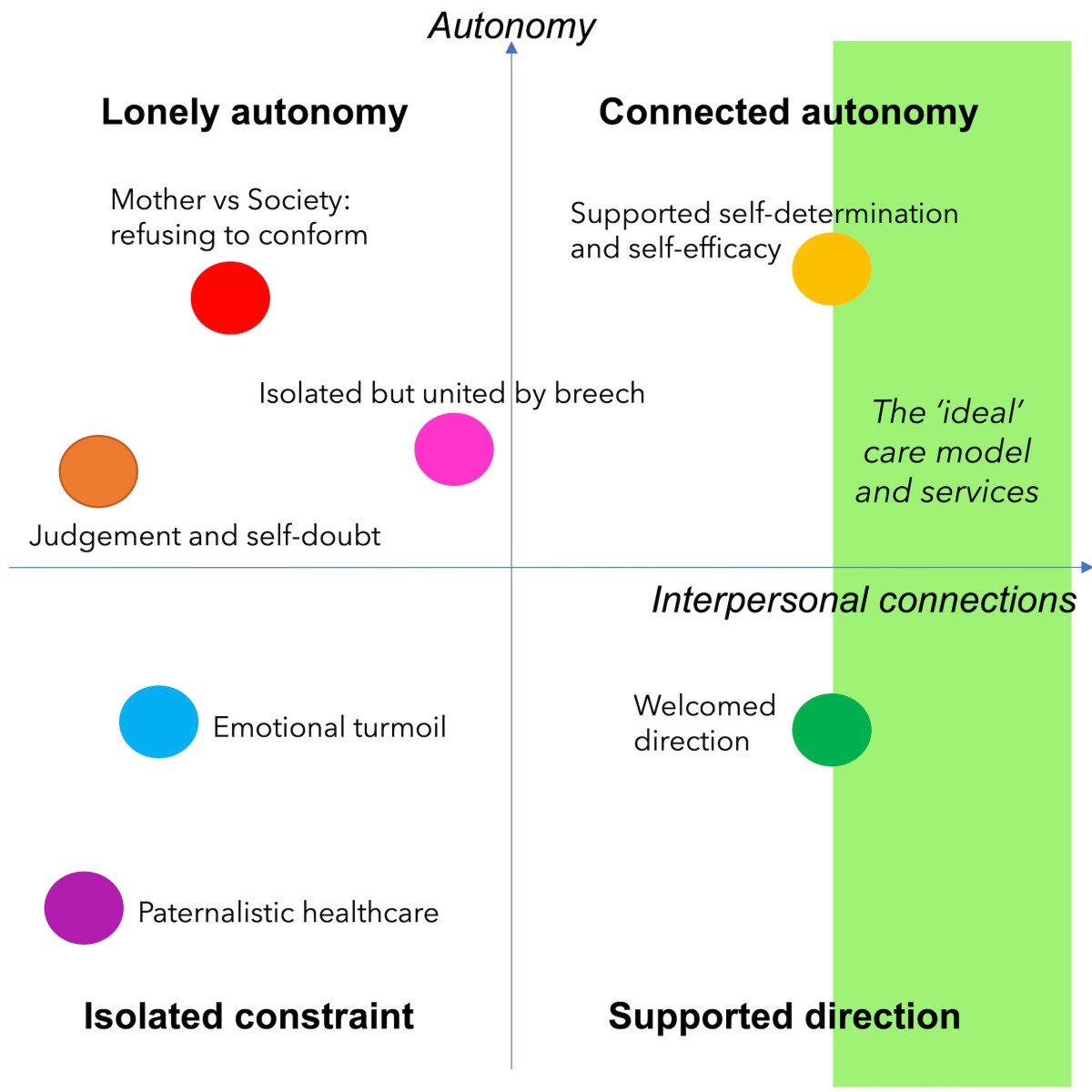
Women seeking to plan a VBB feel vulnerable and wish to connect with capable and confident healthcare providers. To meet their needs, services should be designed so that they can connect with clinicians who are willing and able to support their autonomy. Services should also seek to limit their exposure to disrespectful and judgemental interactions with healthcare providers.

Gray and Roy were joined by service user co-researcher Charlene Akyiaa Prempeh-Bonsu, who planned a vaginal breech birth in the NHS herself within the past five years. Prempeh-Bonsu contributed to data analysis with support and reflective discussions. She helped to ensure the work reflected the needs and interests of the population being described.

The work was supervised by Dr Shawn Walker.

Roy R, Gray C, Prempeh-Bonsu CA and Walker S. What are women’s experiences of seeking to plan a vaginal breech birth? A systematic review and qualitative meta-synthesis [version 1; peer review: awaiting peer review]. NIHR Open Res 2023, 3:4 (https://doi.org/10.3310/nihropenres.13329.1)

What has your experience been? Have you planned (or tried to plan) a vaginal breech birth within the UK NHS? We invite you to leave a comment below. Please let us know if you gave birth within an OptiBreech site, or not.

PPI Meeting, Sunday 30 October, 10 am

We would like to hear from you! 

Link to join (Teams)

We are in the process of developing a research proposal for a feasibility study to investigate the implementation of bedside resuscitation for breech babies who require breathing assistance at birth.

Research indicates that providing this immediate care next to mothers/birthing people reduces parental distress and is found to be more favourable by clinicians due to improving communication with parents while they provide care.

The purpose of this group session is to gain insight and feedback regarding our research aims and design from stakeholders to ensure the research is the next piece of the puzzle in improving breech care, designed appropriately, and acceptable to women/birthing people.

We have scheduled this meeting for 90mins to ensure everyone has enough time to discuss the proposal and ask any questions and we will also provide an optional short survey for anyone to provide any additional feedback if they were not able to during the meeting.

The meeting will be held on Sunday 30th October 10am – 11.30am via Microsoft Teams. You can attend the meeting for the full 90mins or attend like a drop in session. 

We look forward to meeting with you and hearing your thoughts.

Link to join

With very best wishes,

The OptiBreech Team

Plain English summary of the research (limit 400 words):

OptiBreech Care is a specialist care pathway for women whose baby is positioned bottom-down (breech) at the end of pregnancy. Our team previously studied how hospitals provide team care when a woman requests a vaginal breech birth to make sure it was possible. In this model, women found it easier to plan their choice of a vaginal breech birth or a pre-labour caesarean birth. Fewer women had emergency caesarean births, and outcomes for babies were at least as good as standard care. OptiBreech teams found one aspect difficult: leaving the umbilical cord attached if the baby needs help to start breathing. Team members told us this is challenging to achieve because they do not have appropriate equipment and training.

About 1:5 babies born after a vaginal breech birth need some help to start breathing, and about 1:10 are transferred to a neonatal intensive care unit after the birth. We feel we can reduce this to 1:5 (the UK national average for all births) if our specialist teams are able to provide help next to the mother. This will result in better long-term outcomes for the baby. Families have better experiences if they are not separated from babies, during resuscitation or after. Women in our OptiBreech studies have reported feeling let down because in most births where the baby appeared to need help, the cord was cut immediately, despite OptiBreech and UK Resuscitation Council guidance.

We aim to learn how to get optimal cord management right for every birth, how much it will cost and how it may improve outcomes for babies if we do this. We will supply one site with bedside trolleys and team training; another site will use trolleys they already have, with additional support; all thirteen remaining sites will continue to try to implement the recommendations with what they already have. We will observe the process for 12 months initially, during which we would expect 205 planned breech births to occur. We will conduct interviews with staff, parents and birth supporters following births where babies have needed support, to understand how this is working, or not.

By studying the process within small teams, who care for a population at higher risk of needing assistance to begin breathing at birth, we will be able to study and share insights that can improve the process for all teams, across the UK population of term births. We will share our results in scientific papers and a toolkit. Our research team includes a service user who has planned an OptiBreech birth, who will help us to involve other service users in shaping the research and to communicate the results of the research to a wide audience.

Researching how to encourage breech babies to turn

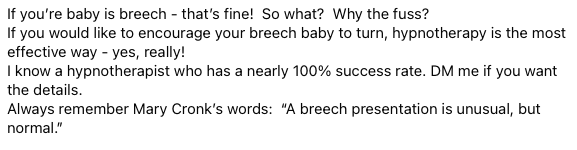
We often share information, especially with professionals, on the Breech Birth Network FaceBook group. We had a post recently promoting hypnotherapy to turn breech babies.

This was my response:

I have approved this post, but I will not in the future approve posts that make claims that do not present the evidence that supports them. This includes training in complementary therapies such as moxibustion.

We now have a wonderful OptiBreech database, which collects data from the point anyone is referred for care related to breech presentation at the end of pregnancy and has a breech presentation confirmed by ultrasound – this can be as early as 32 weeks. It also collects information on how often these babies turn without intervention, and the different types of therapies and advice women receive.

A randomised controlled trial is the best way to test claims for the success of a therapy like hypnotherapy to encourage breech babies to turn head-down. Second-best is a prospective observational study of women who choose and receive hypnotherapy. Because we collect information on women who do not choose and receive hypnotherapy, we still have a point of comparison that would enable us to tell if hypnosis increases turning compared to none.

If any of you providing or teaching complementary therapies would like to collaborate on a trial, please do e-mail me at Shawn.Walker@kcl.ac.uk. We have a team of people who can help design a study and apply for funding. If hypnotherapy is effective, it should be offered to all women within the NHS and included within the OptiBreech care pathway. If not, professionals should not be suggesting it to women.

If you are promoting a therapy, please provide links to the evidence that supports it, to enable women to consider the evidence available before spending money at a time when they are vulnerable. Without evidence, future posts will not be approved.

Shawn

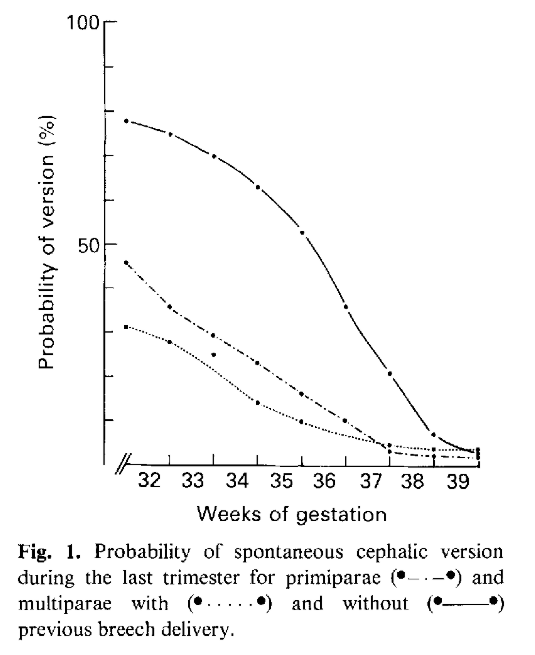
As you can see from the image below, based on previous research, a certain percentage of babies will turn on their own, without intervention. We know the number that turn is higher when we attempt a manual turning (external cephalic version or ECV). But we also know not everyone wants an ECV, and many women report trying alternative or complementary therapies to encourage their babies to turn. As these are popular and acceptable to large numbers of women, it would be best for us to have high-quality evidence about which therapies are effective at helping more babies to turn.

Image: Westgren, M., Edvall, H., Nordström, L., Svalenius, E., Ranstam, J., 1985. Spontaneous cephalic version of breech presentation in the last trimester. Br. J. Obstet. Gynaecol. 92, 19–22. https://doi.org/10.1111/j.1471-0528.1985.tb01043.x
video from Nesta, UK

For more information on Randomised Controlled Trials, see this simple explanation from Nesta in the UK.

What do you think?

We would love to hear from women about whether you think it would be a good idea to test hypnotherapy for turning breech babies at the end of pregnancy.

  • Why or why not?
  • Would you be willing to help us design a test to see if it works?
  • Are there other therapies you would like to see tested?

Thanks as always for your feedback. You can comment on this post or e-mail our team using the form below.

We are also keen to hear from professionals who would like to work with us to deliver research in this area.

Go back

feedback on complementary therapies research

Warning
Warning
Warning
Warning.

BICS2022 Conference

The OptiBreech Research and Public Involvement team share their work at the #BICS22 conference.

The OptiBreech Team enjoyed meeting each other in person for the first time at last week’s British Intrapartum Care Society Conference. And we won a prize! We are so grateful to the women who have participated in our research, the Principal Investigators who have made it all happen locally, and our Steering Committee. Here’s what we shared at the conference:

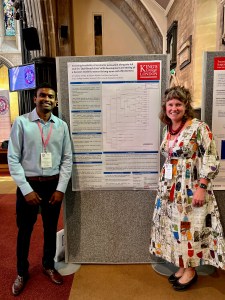
Dr Siddesh Shetty and Dr Shawn Walker

Is it feasible to test OptiBreech Care in a clinical trial?: results of the OptiBreech 1 study – Dr Shawn Walker, Tisha Dasgupta, Siân Davies, Sarah Hunter, Phoebe Roberts, Prof Jane Sandall, Prof Andrew Shennan. We shared the results from our first-stage study, OptiBreech 1. We are currently writing these up in publication format and will share as soon as that is ready. This presentation won the top oral abstract prize at the conference.

The roles and responsibilities of breech specialist midwives in the OptiBreech Care Trial feasibility study: a qualitative inventory Davies, Dasgupta, Natasha Bale, Alexandra Birch, Walker. Siân Davies shared a poster about the role of Breech Specialist Midwives, as described by midwives and obstetricians participating in OptiBreech 1.

Toolkit for implementing breech clinics and specialist midwives to support planned vaginal breech births – OptiBreech PPI Lead and Service User Representative Phoebe Roberts presented this poster. Read more about it here.

Ritika Roy and Cecelia Gray

Women seek ‘connected autonomy’ when they wish to plan a vaginal breech birth at term: a systematic review and meta-synthesis – Ritika Roy, Cecelia Gray, Charlene Prempeh, Walker. Medical students Roy and Gray presented the results of their 2021 King’s Undergraduate Research Fellowships. The results are ready for publication and will be shared in that format soon!

Not too fast not too slow: the legacy of time management in vaginal breech births Jacana Bresson, Walker. Midwifery student Bresson presented the results of her review of obstetric texts in the Royal College of Obstetricians and Gynaecologists and Wellcome Trust Libraries, funded by a 2022 King’s Undergraduate Research Fellowship.

Assessing feasibility of economic evaluation alongside a full trial for ‘OptiBreech Care’ with development and testing of a decision model to assess its long-term cost-effectiveness Dr Siddesh Shetty, Dr Shawn Walker, Prof Julia Fox-Rushby. The Health Economics team used this as an opportunity to gain feedback and peer review on the economic model developed.

Thanks also to the BICS Committee, who organise a wonderful, supportive, multi-disciplinary conference every time!

Student and Masters research placements

Developing research capacity is a high priority for our team. Many of our researchers have come to research as clinicians, students or service users first — with a passion for making things better for women and babies.

We have been lucky enough to have a number of students working with us on summer fellowships or student research placements the last couple of years.

Summer 2021 – King’s Undergraduate Research Fellowship (KURF) holders, medical students Ritika Roy and Cecelia Gray, completed a systematic review and metasynthesis of research about women’s experiences of seeking to plan a vaginal breech birth. They presented a poster on their results at the British Intrapartum Care Society (BICS) conference in September 2022 and plan to submit a paper for publication.

2021/2022 – Masters student Hannah Mullins is collecting data for the Optimal Intervals 2 study at Frimley. Her work will build on Emma Spillane’s original work about optimal intervals for vaginal breech births, testing if the hypotheses are correct across a larger, multi-site sample.

Keelie Christie and Jessica Wood collecting data

Spring 2022 – Leicester University midwifery student Keelie Cristie completed a research elective with the OptiBreech team. She helped set up the Optimal Intervals 2 study at Leicester University Hospital and began data collection. She has also helped process some anonymised interview data.

Summer 2022 – This summer we are lucky enough to have three KURF fellows. Medical student Victoria Taiwo is helping to develop a protocol and instrument to survey the extend of midwives working autonomously to provide various aspects of breech care (scanning, ECV, counselling, attending births) in the UK.

Midwifery student Joanne Kotun is analysing anonymised interview data to contribute to our analysis of facilitators and barriers to implementing team care for physiological breech births. She also worked on setting up the optimal intervals study at Guy’s and St Thomas’ Hospital.

Midwifery student Jacana Bresson has completed a review of textbooks in the Wellcome collection and Royal College of Obstetricians and Gynaecologists library. She reviewed historical guidance provided about the optimal lengths of time to be taken in vaginal breech births, to compare to our emerging optimal intervals evidence. She also present her findings at the BICS conference.

And midwifery student Sophie Rayner was awarded a Wellcome Trust Biomedical Vacation Scholarship. With this time, she completed the data collection on the optimal intervals study at Leicester and worked with Victoria on the protocol to chart breech specialist midwives, clinics and teams in the UK.

Breech Clinics and Specialist Midwives Toolkit

Download the Toolkit here.

Birmingham Women’s Report of their new breech specialist service, October 2022

Original blog:

We will launch our toolkit describing ‘how to build and OptiBreech service from the ground up’ at the British Intrapartum Care Society Conference 2022 in just over a week. When the conference goes live on 29 September, the toolkit will go live.

Image: Kate Stringer

The toolkit brings together clinical and social science evidence in favour of delivering care for breech pregnancy and childbirth through a dedicated clinic and intrapartum care team, co-ordinated by a breech specialist midwife, working in collaboration with a breech lead obstetrician.

The majority of team roles includes tasks that are already performed by someone in your organisation. They key is to task-shift, so that all breech-relevant service leadership tasks are performed by the specialist(s). This increases their expertise, and their work increases skill and competence across your team.

This model addresses two known problems: individualised care and safety. Women want individualised care in line with national guidance, but the way services are usually delivered within the NHS makes this difficult. Clinics and specialists standardise practice, reducing biases in the direction of both caesarean section and vaginal birth. Women enjoy easier access to both planned vaginal breech birth and planned elective caesarean section. Specialists also drive up the safety and quality of care by helping research inform practice as quickly as possible and facilitating cultural change. They enable vaginal breech births to occur in a planned an organised manner, creating learning opportunities that make unplanned births safer.

The toolkit has been developed by: Shawn Walker (OptiBreech Chief Investigator), Phoebe Roberts (OptiBreech Patient and Public Involvement Lead for this project) and Harriet Boulding from the King’s Policy Institute.

The toolkit will be available HERE for download and includes:

Background information

  • What is the problem?
  • How does the OptiBreech approach offer a solution?
  • What is physiological breech birth?
  • What does OptiBreech ‘proficiency’ mean?
  • What is the evidence for this model of service delivery?

What you need to build a breech service

  • A dedicated breech clinic
  • A Breech Lead Obstetrician
  • A Breech Specialist Midwife (Band 7 or 8)

Breech specialist midwives

  • Roles and activities of a breech specialist midwife
  • Where does the money come from?
  • Personal characteristics and circumstances required
  • Compensation and support
  • Involvement in research and quality improvement

Training other team members

  • What training involves
  • Why is this way of training most effective clinically?
  • Why is this way of training most cost-effective?
  • Who does a breech clinic rotation
  • What about people who cannot be on-call?
  • Maximising economic efficiency

Other considerations

  • Role of the on-call obstetric team
  • External Cephalic Version (ECV) and other breech turning modalities
  • What about continuity for planned CS?

Approaches that do not appear to be effective

References

Appendix: Proficiency Achievement Record

This toolkit is funded by an ESRC Impact Acceleration Award, from the King’s College London Social Science Impact Fund. Shawn Walker is funded by a National Institute of Health Research (NIHR300582) Advanced Fellowship. 

Reflections on International Day of the Midwife, 2022 — Breech Birth Network

Shawn talks about some of the challenges of improving the way we deliver care for mothers and their breech babies.

Yesterday was International Day of the Midwife. I saw but didn’t participate in the social media celebrations. Not because I wasn’t feeling it, but because my clinical academic midwife life was full to the brim. 931 more words

Reflections on International Day of the Midwife, 2022 — Breech Birth Network