Blog

Understanding Induction of Labour for Vaginal Breech Birth: What Do We Know and What’s Next?

Webinar Wednesday 19 November 2025, Microsoft Teams

Vaginal breech birth (VBB), where a baby is born bottom or feet first, is becoming increasingly accepted as a safe option for some women when supported by skilled professionals. However, there’s still uncertainty about what happens if labour needs to be started or “induced.” Because there isn’t much evidence about the risks and benefits of induction of labour (IOL) for breech babies, many clinicians remain cautious. This can limit women’s choices and could potentially lead to some women making unsafe decisions, especially when birth needs to be brought forward for medical reasons.

This webinar will share findings from a recent systematic review which looked at what is currently known about the safety of inducing labour for women with a breech baby at term. It compared outcomes with:

  • Women who went into labour spontaneously
  • Women who had a planned caesarean when earlier birth was advised
  • Women with a head-down (cephalic) baby who had labour induced

I’ll share what the research tells us, and where the gaps still are.
We’ll open the conversation to explore what further research is needed, and how both women and professionals can work together to shape safer, more informed choices for breech birth in the future.

The term “women” is used here in relation to biological sex. We recognise and respect that people of diverse gender identities also give birth, and we aim to include and welcome everyone with lived experience of pregnancy and birth in this discussion.

Everyone is welcome, whether you’re a parent, birth worker, midwife, obstetrician, researcher, or simply interested in supporting informed decision making in maternity care.

Amy Meadowcroft, Breech Specialist Midwife, NIHR Pre-doctoral clinical fellow, Oldham

We will also discuss induction of labour for planned vaginal breech birth in our upcoming half-day study day on 21st November, also available via subscription to our OptiBreech Webinars series.

Moving forward: the current status of OptiBreech Collaborative Care

Dear Shawn
Trust all is well at your end
Shawn as we are not doing optibreech trial do we need to change anything at our end especially with regards to legality etc.
some queries which have cropped up here
What is the frequency of training?
Is this MDT training?
Who runs the training?
Optibreech trained staff – numbers and skill mix?
What is the compliance for completion of vaginal breech birth training offered?
Is there a lead for the Optibreech trial – may be helpful to meet with them?
Also otherwise any legal changes etc ….

The OptiBreech pilot trial and feasibility study ended on 31 January 2024. The team made four applications for further funding, but unfortunately funding for a substantive trial was not gained. Without further funding, we will not know the effects of full implementation of the OptiBreech Collaborative Care pathway as the standard care pathway for breech care in the UK.

The evidence from the pilot work indicates better outcomes than any prospective study previously done, especially in the UK. This may change with greater numbers, but without further research, we will never know. Our early economic modelling suggests that the care pathway is likely to be cost effective. Again, without a substantive trial, we will never know.

Many of the sites that participated in the pilot and feasibility work have continued to offer the OptiBreech Collaborative Care pathway to women pregnant with a breech-presenting baby late in pregnancy. When they have had less than ideal outcomes, as is inevitable, those offering this model of care have come under increased pressure to justify offering a service that has not been demonstrated in a full RCT to improve outcomes, compared to standard care.

This is therefore a good time to explain exactly what OptiBreech Collaborative Care is, how it differs from standard care, and if the lack of RCT-level evidence should be a barrier to offering this model of care to women.

What is OptiBreech Collaborative Care?

First of all, OptiBreech Collaborative Care is a care bundle, or care pathway, rather than something entirely new and different from ‘standard care.’ The model organises the elements of care women need to make an informed choice about their planned mode of birth for a breech baby, and to optimise the chances that the outcomes will be good if a woman chooses to plan a vaginal breech birth.

The ways the pathway differs from standard care are outlined below.

A dedicated clinic, co-ordinated by a breech specialist midwife, in collaboration with an obstetric lead for breech

UK national guidelines state that women should be supported to make an informed choice about their planned mode of birth for a breech-presenting baby at term. All of the available qualitative evidence indicates that currently in the UK, the majority of women who might wish to plan a vaginal breech birth do not feel that choice is accessible to them and/or they do not feel supported when they make that request.

Qualitative evidence from both women and clinicians contributing to OptiBreech feasibility work confirmed the lack of accessibility of this care option, which national guidelines state that women should be offered. The OptiBreech pilot trial was stopped early because at an interim analysis, there was ALREADY a statistically significant difference in the number of women planning a vaginal breech births under OptiBreech Care compared to standard care, in which none planned a VBB.

Therefore, there is already RCT evidence that the availability of this option, which national guidelines say women should have access to, is improved by providing an OptiBreech clinic within this model. Given that the available economic modelling suggests supporting the option of a safe-as-possible VBB, and the only available RCT demonstrates a significant difference within even pilot-level data in the availability/acceptitibility of this choice, there does not appear to be a pressing need to justify providing care within a dedicated clinic.

Clear definitions of competent, proficient and specialised in vaginal breech birth

What women who wish to plan a VBB say they need from a breech birth service is to know that it is very likely that someone with skill and experience will attend their birth. This is a completely reasonable request, given that the RCOG guideline states that, “with skilled and experienced attendants, planned VBB is likely to be nearly as safe as planned cephalic birth.”

I have been writing about the problematic ambiguity in this statement since it was published. My PhD was dedicated to defining ‘skill and experience’ and how one acquires these within contemporary maternity care. And OptiBreech was/is about finding out how ‘near’ is ‘near.’

Having definitions of proficiency helps enable women to make an informed decision about the support they can expect to receive around the time of birth. This is a discussion that should occur prior to, and during, every birth. If on the day of labour, the only staff available have minimal training, experience and confidence, the birthing person should be informed transparently and supported in their decision to carry on or divert to an early labour caesarean birth.

During the OptiBreech pilot and feasibility work, we provided teams with a proficiency portfolio document to record their experience level, for their own protection and learning, and to accurately inform women. But it was never a requirement. Every clinician has a responsibility to maintain their own records, as it always has been. If Advanced Practice becomes regulated, this is a model for how this might look for breech practitioners at the moment.

All women should have and should be informed that having their birth attended by a skilled and experienced practitioner does not guarantee a good outcome. But it is the only thing ever associated with the improved likelihood of a good outcome.

A plan for getting the right people in the right place at the right time … and a plan for when this is not possible

The most common way that women are discouraged from planning a VBB when they would otherwise like to consider it, is they are told that the staff at this hospital do not have enough experience / a dedicated team / a specialist. And that is the end of the discussion.

There is not a single hospital on the planet where every member of staff feels completely comfortable and competent to support a vaginal breech birth. None. If you try to tell me yours does, I will tell you to go back, speak with each obstetrician privately, and ask them to tell you how they really feel. People always feel pressure to conform, either conform to discouraging the option of VBB so nobody has to do it, or conform to the illusion that anyone can do it.

The reality is, INDIVIDUAL PEOPLE have skills and experience, INSTITUTIONS have people. No institution has a uniform level of skill and experience throughout its maternity staff to support a VBB at the highest level. In institutions that support VBB regularly, INDIVIDUAL PEOPLE may have a high level of skills and additional synergistic experience working with other members of their team, which again improves the safety of VBB.

The only way to increase the chances that someone with skill and experience will be at the birth is to make a plan for it. OptiBreech teams have never had a minimum required number of trained or proficient members. If there are fewer trained practitioners, the chances that one will be able to attend may be lower. If there are more, they may be more likely to ensure an experienced attendants.

But I cannot emphasise enough that many women are grateful if JUST ONE midwife or obstetrician is willing to work flexibly to attend their birth if they can. Requiring staff to have a minimum level of experience in order to ‘allow’ women to plan a vaginal breech birth is not ethical.

What is the frequency of training?

Guidance for what clinicians should do to acquire competence and maintain proficiency is available in previous consensus-based research. In our feasibility work, staff were required to have completed the OptiBreech training, which had previously been evaluated in NHS settings. And they were required to inform women of their experience levels. And the outcomes were very good.

Requiring a further frequency of training in order to ‘allow’ a woman to attempt a vaginal breech birth introduces an obstacle to informed decision-making without any evidence that it will improve outcomes.

Is this MDT training?

The evidence of how we evaluated the training package and with what professionals is readily available. All training, and the research, were multi-disciplinary. National guidance is that Trust internal mandatory training should be multi-disciplinary, and to our knowledge, this is what current OptiBreech sites are doing.


Who runs the training?

In the OptiBreech feasibility study, training was provided by Breech Birth Network, CIC, as this was the only physiological breech birth training that had previously been evaluated in NHS settings. Since the end of the study, sites run their own internal mandatory training and pay to send their staff to the evaluated, full-day study day when they feel it helpful to train new team members. Many breech specialists lead breech training within their own settings, for both midwives and doctors.


Optibreech trained staff – numbers and skill mix?

I am not sure what this question is aimed at. This answer varies for each Trust and for each woman. It varied for each Trust in our pilot and feasibility work.

Again, requiring a certain number of trained staff before women are ‘allowed’ to plan a vaginal breech birth will restrict both women’s informed choices and the ability of any Trust to begin to develop a team. In most sites, building a team began with one person willing to be on-call, until others developed experience and confidence. This strategy resulting in better than standard outcomes.


What is the compliance for completion of vaginal breech birth training offered?

Again, what is this question aimed at? Who is requiring compliance, to what standard, and due to what evidence?

If a clinician says they have completed an evaluated study day in physiological breech birth and they have not, that would be a violation of professional standards. Prior to OptiBreech, there were no proficiency standards, and we have added guidance.

But – to repeat – requiring additional compliance standards will create a barrier to women accessing care from clinicians willing to support their informed choice. With no evidence that requiring some form of ‘compliance’ will improve outcomes.

The only available evidence (from the OptiBreech feasibility and pilot studies) indicates that providing guideline standards and an evaluated physiological breech birth training day for core staff, who then disseminate it to others through mandatory training and skills drills, so far results in an adverse outcome rate that was 1/10th that in the Term Breech Trial (0.5% vs 5.0%).


Is there a lead for the Optibreech trial – may be helpful to meet with them?

Dr Shawn Walker (that’s me) is the lead for the OptiBreech pilot and feasibility trial, which ended on 31 January 2025.

Recent breech birth experience


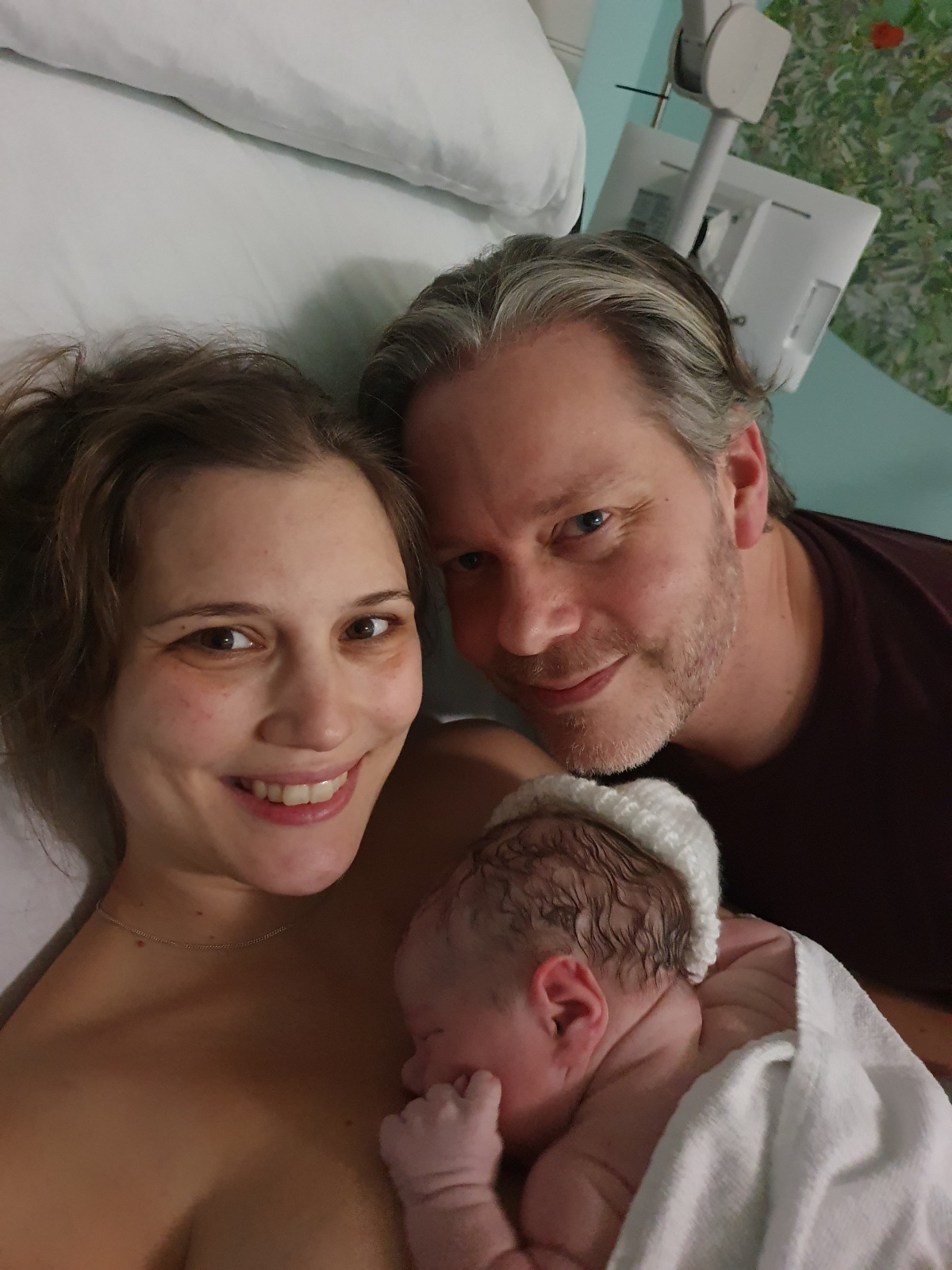
Recently a new mother got in touch with the OptiBreech team and was keen to share her story and experience with others.

We welcome all feedback and experiences as they can be so useful to understand how OptiBreech research is being utilised by the public.

“We all know no two babies are the same, so it came as no big surprise that my two pregnancies should not be the same. Most notably, baby #2 decided – sometime around week 23 – to make itself comfortable in a breech position. Following an additional scan during week 33, he was settled in footling breech, and I started working on all the advised exercises to help encourage him to flip. I did daily pelvic inversions, daily pelvic tilts, had 2 appointments for an ECV with a total of 3 consultants trying their luck – but nothing would move him out of his breech presentation. Ironically, it wasn’t the bum that was the difficult part during the ECV, but rather his head did not want to move away from between my ribs. So, we faced the cold reality of what a breech presentation means these days, particularly in Scotland and at the Forth Valley Royal Hospital: doctors telling us that their best advice is to schedule an elective caesarean section, mostly determined bythe sheer lack of properly trained personnel for vaginal breech births ever since the Term Breech Trial of 2000. But no thank you! This was my last baby, my last pregnancy, and my last birth. And after my first delivery ended up rather differently from what I had anticipated (induction, epidural, forceps, episiotomy – all things I wished to avoid), this was my last and only chance to use my prior experience and for this time to “get it right”. I wanted to go into labour on my own terms. I wanted to deliver vaginally. I wanted to deliver without an epidural to be able to remain mobile… So this breech position presented an issue. And as far as we were told only 2 consultants at this hospital were experienced with vaginal breech deliveries, but their working schedules were unknown as we approached the Christmas holidays. Thankfully, the doctors allowed us plenty of time to make an informeddecision and reassured us they would support any of our choices, as long as we are fully aware of all the associated risks. My main consultant was even happy for me to go past my due date by about 12 days for a scheduled section, which was a little surprising.

Baby Elliott

At 39 weeks I was booked in for a growth scan and to check baby’s position again. We were in complete breech and the measurements estimated a foetal birth weight of more than 4kg (weight at 39 weeks was estimated to be 3946g). Risks to baby of a vaginal delivery were highlighted again, particularly should the foot end up presenting first. By that point, I had done a ton of research and reading around vaginal breech deliveries and found the Breech Network an invaluable resource. I had also started hypnobirthing exercises to help me prepare for a calm and relaxed labouring process and birth, whichever way it would end up.

Once I approached my due date, I worked hard to help kick start my labour for two reasons: 1 – my mum was visiting from Germany for a week to hopefully meet her second grandchild, and 2 – because every day this baby was getting a little bit bigger, making a natural delivery less and less likely. I was doing hip circles on my birthing ball, lunges and squats, curb walking, sideways stair climbing, nipple stimulation and colostrum harvesting, sex, clary sage oil massages, acupressure, the lot. I was also booked in for 2 membrane sweeps, but neither happened as baby’s bum was not engaged and sitting on my pelvic brim, thereby posing a danger in case the midwife broke my waters during the sweep. However, one highly experienced midwife offered to at least do an internal examination to see whether anything was happening yet at all. She determined I was about 2-3cm dilated, could feel a foot at the cervical opening and only offered a very gentle cervical stretch, which went well. That evening I felt some tighteningsand was hopeful that this was the “push” needed to get labour started. However, the following day the tightenings had stopped almost completely, which was a little disheartening. The next day, I knew there were tightenings present, but they were rather unnoticeable, particularly during periods of activity or distraction. So at night, after my toddler was finally sound asleep, I decided to spend an hour of quiet time to observe my tightenings. I put on my hypnobirthing app and relaxation soundtrack and used the contraction timer to monitor frequency and duration of each tightening (which at this point I could only really feel when I placed my hand on my bump). As it turned out I had about 3 contractions in 10min, each lasting 80-90sec. I phoned maternity triage for advice given my situation and they asked us to come in for a check-up. Once we had childcare for the night in place, my husband, mum, and I drove to the hospital. The exam determined I was still only about 3cm dilated and that the foot was still the first presenting part. That said, the midwife said I would be okay to head home for a while longer, a decision that was quickly overturned by the consultant on shift that night who realised the risks of a cord prolapse with a footling presentation should my waters break en route or at home. So I was admitted and we spent the night – husband and mum sleeping uncomfortably in a chair and on the floor padded with jackets, and me with increasing “period pains”. By the morning I knew I was in early labour! 

I met the relatively young consultant who was on shift that day and he reassured me that he would be around for the next 24 hours and that he is comfortable with vaginal breech deliveries and has carried out a few of them. After reminding us of the current risks of my baby’s presentation and estimated weight, along my decision to want to deliver vaginally, we agreed that the ultimate decision would be made at the point when my waters break – if baby’s bum is low enough I would be allowed to carry on, and if it wasn’t I would be taken to theatre for a section immediately. We agreed and all necessary precautions (cannula, meeting the anaesthesiologist) were taken. He even offered to attempt a third and final ECV to which I agreed, but it clearly did not work.

During the day, I continued to labour with the help of my breathing exercises, the hypnobirthing relaxation soundtracks, movements, a couple of Paracetamols, and some intense pelvic counterpressure applied during each contraction by my two birth partners. I was able to keep going right until the moment I felt the need to push. The consultant gave me a quick examination and determined that I was fully dilated and still with a foot coming first. During my third contraction with pushing my waters finally broke (exploded!) and his little foot popped out. Another quick examination determined that thankfully the bum was low enough for me to continue on my path and the consultant only helped deliver the second foot before remaining “hands off”. As baby descended on its own, I could feel his legs flexing as I knew breech babies do during delivery, but the pain I experienced during those movements was intense and felt like someone was tugging and pulling him, further exacerbating the pain. I was on my 4s and reminded myself of the breathing techniques I learned from my hypnobirthing practice and the research I read on the Breech Network website (down-breathing and cyclic pushing). I knew time was of the utmost essence, so I remained focussed through the pain to make each push count and to get this baby delivered as quickly as I can. Halfway through the birth I was asked to switch onto my back and to move onto another bed, a task which seemed utterly impossible at the time with the labour pains and the lack of mobility as half of my baby was already born. But the move was important to flex and deliver his head, and so everyone helped me into my new position. Once on my back I reached down and could feel my baby’s floppy body. The consultant informed me that he is going to help deliver the arms, which were stretched up by the head. He managed to get the arms out and I felt an immediate and welcomed relief of the ring of fire. This was the final moment. Time had ticked on and the largest part had yet to be born. My husband told me that during the next push the head started to emerge, but retracted back into the birth canal as the cord was wrapped around his neck 3(!!) times – no wonder he didn’t flip around!

I was asked to give a really big push with my next contraction, but because I hardly felt or noticed my contractions during the whole delivery, I instead got myself mentally and physically ready and in my own time started afinal long and strong push. Birthing the head felt like a big ‘pop’ and an immense feeling of pain relief, exhaustion, and zen.

My baby’s cord was clamped and cut straight away (apparently the cord was stretched and white/compressed during a large proportion of the birth and tore during the delivery of the head) and he was taken to the resuscitation trolley to get his breathing started. He was quite stunned, blue and floppy and it took a little while to bring him back (APGAR score of 2 at 1min – heart sounds only; 6 at 5min) but the paediatricians knew what to do and did a great job. From my waters breaking to him being fully born took a total of 11 minutes (even though it felt a lot longer to me), and he was weighed at a proud 4165g. 

We stayed in hospital for about 28 hours and Elliott took his first feed on the breast after a good 6-hour recovery nap. He passed all his exams and tests and is a healthy and thriving baby.

I am so immensely grateful to have had this particular birthingexperience and I feel incredibly proud of not only what I achieved, but also for believing in myself and nature, sticking to my beliefs within the realms of safety for me and the baby, and to remain strong in the face of the potential risks. I owe a big part of this to the information available from the Breech Network and the birth preparations and positive affirmations provided by the Positive Birth Company. I don’t know how many times or how many medical staff I told that if no one is willing to give vaginal breech births a chance, how are the doctors and midwives ever going to get these skills back?”

— Sandy MacMillan

Wellcome Trust Biomedical Vacation Scholarships, Summer 2024

Deadline for applications: 2 April 2024!

We have a project advertised with this summer research fellowship opportunity. Please share with your student midwifery networks ASAP.

OptiBreech project on page 27!

– Shawn

OptiBreech pilot closing this month

The OptiBreech research study closes this month, but we hope to be back again in the future.

Thank you to everyone who has been in touch to ask how you can help make sure OptiBreech research carries on. We have been incredibly moved by your support. For those of you who would like to do something to make a difference, you can let these organisations know that you feel this should be a research priority:

After many months of hard work, the OptiBreech pilot and feasibility work is finally drawing to a close at the end of January. This is the planned closing date, defined by the length of our funding for pilot and feasibility work (Shawn’s NIHR Advanced Fellowship). In fact, with the support of the Trial Steering Committee, we kept the observational arm of the study open for several months longer than originally planned, in order to monitor outcomes for sites that were continuing to offer OptiBreech care.

You can access all of our publications on this site, and we will update with the remaining few we are working on.

Thank you for all of your support! We are especially grateful to all of the women and birthing people who have participated in our study and allowed us to collect data about their births.

Unfortunately, our applications for further funding were unsuccessful. That means that we cannot at this time proceed to a substantive / full trial. Therefore, we will stop collecting data for the moment, and try again this year. We’re grateful for the women and clinicians who helped to inform our project proposals, which included:

If you think, as we do, that we need to continue evaluating the outcomes of OptiBreech care to make vaginal breech birth safer and easier to access for all women, not just those privileged with resources and social support to surmount resistance to this choice — now is the time to share your views. The RCM is inviting views on Midwifery practice and maternity care in the UK. You can share what matters to you, whether this is breech or any other topic.

Most OptiBreech sites will continue to offer support for planned vaginal breech births. For those of you who have told us that you intend to try to start an OptiBreech service anyway, we will support you to the best of our ability. Below are some resources. 

Information for professionals – all of our resources for professionals

Breech Clinic and Team Resources – examples of guidelines and research

Publications – Newest OptiBreech publications available here

Breech Clinic and Midwives Toolkit – further support for implementing an OptiBreech service

And Optibreech training is available from Breech Birth Network (online and in person study days) and the RCOG on 9 May.

Thank you again for all of your support. We have loved serving you.

Breech-COS meeting: May 8, 2024

Avni Batish and Kate Stringer, photo by George Haroun

On May 8th, we will be holding an on-line meeting to establish a consensus on short-term outcomes in our Breech-COS study. We invite anyone with an interest to attend. Book here to attend.

Topic: Breech core outcome consensus meeting

Time: May 8, 2024 01:00 PM London

Join Zoom Meeting

https://us02web.zoom.us/j/84189094830

Resources: https://www.dropbox.com/scl/fi/n47pquji0f532shm8cl4q/Breech-COS-results-presentation-with-recs.pdf?rlkey=7fquw7p9qmy0f8zobgrz95kd1&st=6crgb7b8&dl=0

Papers to inform the above events:

Walker S, Dasgupta T, Halliday A, Reitter A. Development of a core outcome set for effectiveness studies of breech birth at term (Breech-COS): A systematic review on variations in outcome reportingEur J Obstet Gynecol Reprod Biol. 2021;263:117-126. doi:10.1016/j.ejogrb.2021.06.021

Walker S, Dasgupta T, Shennan A, Sandall J, Bunce C, Roberts P. Development of a core outcome set for effectiveness studies of breech birth at term (Breech-COS)—an international multi-stakeholder Delphi study: study protocol. Trials. 2022;23(1):249. doi:10.1186/s13063-022-06136-9

How it began …

Shawn Walker is funded by a National Institute of Health and Care Research (NIHR) Advanced Fellowship (300582, OptiBreech).

Upcoming Zoom Webinars, Autumn 2023

This autumn, the OptiBreech Collective will host three webinars to share learning from our on-going research and address common concerns. These webinars are designed for professionals attending planned or unplanned vaginal breech births but are open to all.

This autumn, the OptiBreech Collective will host three webinars to share learning from our on-going research. These webinars are designed for professionals attending planned or unplanned vaginal breech births but are open to all. We will address three common fears and concerns about vaginal breech birth.

Translated caption options will be available.


Thursday, 26 October 2023 from 13:00 to 14:00 GMT 

  1. Preventable
  2. Manageable
  3. Unpredictable and potentially catastrophic

Which have you encountered? Would you know how to prevent and/or manage if needed?


Wednesday, 22 November 2023 from 13:00 to 14:00 

When you have been involved in forceps deliveries of the aftercoming head, how has the communication worked? Did everyone know their role? We will share our learning with you about how to optimise communication and attention when there is a tight fit just at the end.


Monday, 11 December 2023 from 13:00 to 14:00 

When your initial attempt at releasing the arms do not work, what are your options? We will talk you through our strategies and experience.


How can you join?

If you are staff at a current OptiBreech site or your site has submitted an expression of interest for our planned stepped-wedge cluster trial, your OptiBreech lead/contact has received calendar invites with the Zoom webinar links.

If you are subscribed to one of our online courses, you will find these links within the course, as below. There, you can download a calendar invite with the Zoom link.

Participatory Research Webinar: 15 September @ 2 pm

All invited to this participatory research webinar, where we will share findings from our qualitative research and invite you to shape our interpretations!

Join the webinar using this Zoom link: https://us02web.zoom.us/j/85392795495?pwd=Z2NMelErWmZLb2xFOHhzR3ZSK0JlQT09

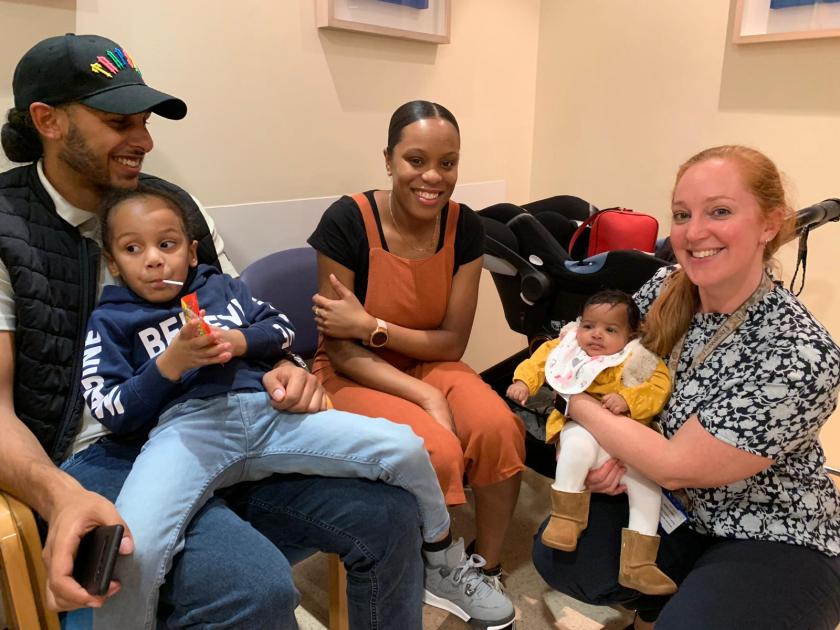
Sharna, Cianna, their family and their midwife, Anne

In this participatory research webinar, we will share the results of two of the OptiBreech qualitative research projects. We invite all stakeholders (participants, women & birthing people, clinicians, service leaders and policy makers) to reflect on our findings with us and shape the interpretations we will summarise in our papers’ discussions.

Work will be presented by Research Assistants Honor Vincent and Alice Hodder, along with our PPIE Lead, Sian Davies. Abstracts of the two papers are below. If you have contributed to the research (clinicians and research staff), you will receive a copy of our draft paper and an invitation to make comments and/or recommendations for revisions.

If you are a stakeholder, we invite you to share your views in the meeting chat, raise them when we open the meeting for discussion or send them directly to a member of the research team.

For all sites that have expressed an interest in our planned stepped wedge trial of OptiBreech collaborative care: please include your name and hospital in the webinar chat, and we will award one site selection point for every site that participates.

Introduction: Increased rates of caesarean section for breech presentation and lack of training have reduced professional experience and expertise in supporting vaginal breech birth. OptiBreech collaborative care is a care pathway that aims to enable maternal choice and improve training opportunities for maternity professionals, through dedicated clinics and intrapartum support. In feasibility work, barriers and facilitators to team implementation were observed by team members. This study seeks to describe these factors to optimise future implementation of OptiBreech collaborative care.

Methods: Semi-structured interviews were conducted with staff members at OptiBreech trial sites (17 midwives and 4 obstetricians, n=21), via video conferencing software. A Theoretical Domains Framework (TDF) was used to identify factors impacting team implementation. Themes identified in the TDF were refined in reflective discussion and grouped into key facilitators, key barriers, and dynamic factors (which span both barriers and facilitators). The interviews were then coded, analysed and interpreted according to the refined framework. 

Results: The key facilitators were broadly categorised within skill development, beliefs about capabilities and social support from the wider multidisciplinary team. Key barrier categories were resources, social obstacles and fears about consequences. Dynamic factor categories were individual responsibility, training and practice. 

Conclusions: While some factors affecting implementation were specific to the individuals and cultures of certain trusts, recommendations emerged from analysis that are more broadly applicable across multiple trusts. These should be considered going forward for future trust implementation in the next stage of clinical trials.

Background: The safety of vaginal breech birth (VBB) is associated with the skill and experience of professionals in attendance, but minimal training opportunities have led a to a lack of willingness to support these births. OptiBreech collaborative care is a pathway designed to support maternal choice and professional training, through dedicated breech clinics and intrapartum support. In feasibility work for the OptiBreech Trial, these were usually co-ordinated by a key midwife on the team, functioning as a specialist.

Objective: To describe the roles and tasks undertaken by breech specialists in the OptiBreech 1 study (NIHR300582).

Methods: Semi-structured interviews were conducted with OptiBreech team members (17 midwives and 4 obstetricians, n=21), via video conferencing software. Template analysis was used to code, analyse, and interpret data relating to the roles of the midwives delivering breech services. Tasks identified through initial coding were organised into five key themes in a template, following reflective discussion at weekly staff meetings. This template was then applied to all interviews to structure the analysis.

Results: Breech specialists as change agents emerged as important in multiple settings; each fulfilled similar roles to support their teams, whether this role was formally recognised or not. In this study, this role was most commonly described as fulfilled by midwives, but some obstetricians also functioned as specialists. We report an inventory of tasks performed by breech specialist midwives, organised into five themes: Care Planning, Clinical Care, Education and Training, Service Development, and Research. 

Conclusions: Breech Specialists perform a consistent set of roles and responsibilities to co-ordinate care throughout the OptiBreech pathway. The inventory has been formally incorporated into the OptiBreech collaborative care intervention. This detailed description can also be used by employers and professional organisations who wish to formalise similar roles to meet consistent standards and improve care.

Keywords: breech birth; specialist midwife; intrapartum care; trial feasibility

Webinar 30 August 5PM: Testicular complications of vaginal breech birth

We discuss potential complications of vaginal breech birth openly, honestly and without sensationalising. 30/8/23 5PM London Webinar. Breech Birth Network welcomes guest host, David Coggin-Carr. David will provide an evidence- and experience-based update on testicular complications of vaginal breech birth.

Join the webinar using this Zoom link: https://us02web.zoom.us/j/88170521832?pwd=U1RUSzhPNTJ3elVRSFRuL3c2bGszQT09

David Coggin-Carr is a UK+US dual-certified obstetrician, Maternal-Fetal Medicine subspecialist and early career physician-scientist at the University of Vermont (UVM). He practices full-spectrum MFM in Vermont and upstate New York and additionally serve as Associate Medical Director of the Birthing Center and Associate Director of Quality for Obstetrics at UVM Medical Center. In recent years he has developed a strong interest in physiological breech birth in response to the local community’s desire for greater autonomy around their birth choices amidst a near-total lack of trained/experienced providers in the region. Accordingly, he now regularly provides consultations and intrapartum support for planned vaginal breech birth.

Image: Book of Traceable Heraldic Art

All births have the potential for injury, whether this be facial markings from forceps delivery or lacerations from a caesarean birth. Vaginal breech birth has its own variations. This webinar will explore how vaginal breech birth affects neonatal genitals, both normal variations in appearance from being born bottom-first, to potential injuries.

We will also discuss what research on genital injuries should be done, and how these should be measured and reported in clinical trials. This discussion will inform the on-going Breech-COS (core outcome set) in the OptiBreech research programme.

We will discuss and consider the statements:

There should be no requirement to report genital injury as a separate category in ALL effectiveness studies of breech birth at term, although it may be reported in some. It should not be included in the Breech-COS composite measure of severe morbidity.

or

The incidence of significant genital injury, defined as one that is likely to have long-term, life-altering consequences, should be reported as a separate category in ALL effectiveness studies of breech birth at term. Significant genital injury should be included in the Breech-COS composite measure of severe neonatal morbidity associated with vaginal breech birth.

For all sites that have expressed an interest in our planned stepped wedge trial of OptiBreech collaborative care: please include your name and hospital in the chat, and we will award one site selection point for every site that participates.

References

Kekki, M., Koukkula, T., Salonen, A., Gissler, M., Laivuori, H., Huttunen, T.T., Tihtonen, K., 2022. Birth injury in breech delivery: a nationwide population-based cohort study in Finland. Arch. Gynecol. Obstet. https://doi.org/10.1007/S00404-022-06772-1

Habek, D., 2023. Traumatic testicular avulsion during amniotomy in vaginal breech delivery. Eur. J. Obstet. Gynecol. Reprod. Biol. https://doi.org/10.1016/j.ejogrb.2022.12.003