Participatory Research Webinar: 15 September @ 2 pm

All invited to this participatory research webinar, where we will share findings from our qualitative research and invite you to shape our interpretations!

Join the webinar using this Zoom link: https://us02web.zoom.us/j/85392795495?pwd=Z2NMelErWmZLb2xFOHhzR3ZSK0JlQT09
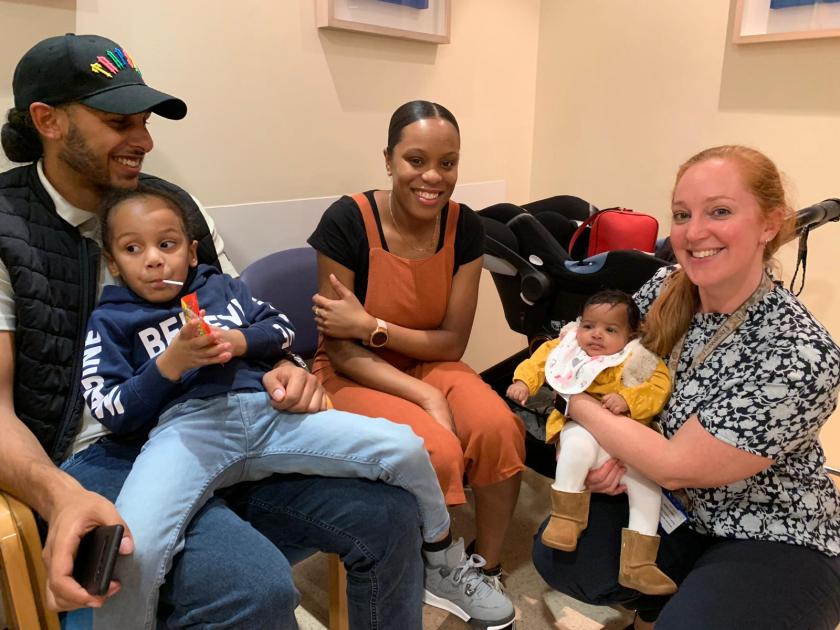
Sharna, Cianna, their family and their midwife, Anne

In this participatory research webinar, we will share the results of two of the OptiBreech qualitative research projects. We invite all stakeholders (participants, women & birthing people, clinicians, service leaders and policy makers) to reflect on our findings with us and shape the interpretations we will summarise in our papers’ discussions.

Work will be presented by Research Assistants Honor Vincent and Alice Hodder, along with our PPIE Lead, Sian Davies. Abstracts of the two papers are below. If you have contributed to the research (clinicians and research staff), you will receive a copy of our draft paper and an invitation to make comments and/or recommendations for revisions.

If you are a stakeholder, we invite you to share your views in the meeting chat, raise them when we open the meeting for discussion or send them directly to a member of the research team.

For all sites that have expressed an interest in our planned stepped wedge trial of OptiBreech collaborative care: please include your name and hospital in the webinar chat, and we will award one site selection point for every site that participates.

Introduction: Increased rates of caesarean section for breech presentation and lack of training have reduced professional experience and expertise in supporting vaginal breech birth. OptiBreech collaborative care is a care pathway that aims to enable maternal choice and improve training opportunities for maternity professionals, through dedicated clinics and intrapartum support. In feasibility work, barriers and facilitators to team implementation were observed by team members. This study seeks to describe these factors to optimise future implementation of OptiBreech collaborative care.

Methods: Semi-structured interviews were conducted with staff members at OptiBreech trial sites (17 midwives and 4 obstetricians, n=21), via video conferencing software. A Theoretical Domains Framework (TDF) was used to identify factors impacting team implementation. Themes identified in the TDF were refined in reflective discussion and grouped into key facilitators, key barriers, and dynamic factors (which span both barriers and facilitators). The interviews were then coded, analysed and interpreted according to the refined framework. 

Results: The key facilitators were broadly categorised within skill development, beliefs about capabilities and social support from the wider multidisciplinary team. Key barrier categories were resources, social obstacles and fears about consequences. Dynamic factor categories were individual responsibility, training and practice. 

Conclusions: While some factors affecting implementation were specific to the individuals and cultures of certain trusts, recommendations emerged from analysis that are more broadly applicable across multiple trusts. These should be considered going forward for future trust implementation in the next stage of clinical trials.

Background: The safety of vaginal breech birth (VBB) is associated with the skill and experience of professionals in attendance, but minimal training opportunities have led a to a lack of willingness to support these births. OptiBreech collaborative care is a pathway designed to support maternal choice and professional training, through dedicated breech clinics and intrapartum support. In feasibility work for the OptiBreech Trial, these were usually co-ordinated by a key midwife on the team, functioning as a specialist.

Objective: To describe the roles and tasks undertaken by breech specialists in the OptiBreech 1 study (NIHR300582).

Methods: Semi-structured interviews were conducted with OptiBreech team members (17 midwives and 4 obstetricians, n=21), via video conferencing software. Template analysis was used to code, analyse, and interpret data relating to the roles of the midwives delivering breech services. Tasks identified through initial coding were organised into five key themes in a template, following reflective discussion at weekly staff meetings. This template was then applied to all interviews to structure the analysis.

Results: Breech specialists as change agents emerged as important in multiple settings; each fulfilled similar roles to support their teams, whether this role was formally recognised or not. In this study, this role was most commonly described as fulfilled by midwives, but some obstetricians also functioned as specialists. We report an inventory of tasks performed by breech specialist midwives, organised into five themes: Care Planning, Clinical Care, Education and Training, Service Development, and Research. 

Conclusions: Breech Specialists perform a consistent set of roles and responsibilities to co-ordinate care throughout the OptiBreech pathway. The inventory has been formally incorporated into the OptiBreech collaborative care intervention. This detailed description can also be used by employers and professional organisations who wish to formalise similar roles to meet consistent standards and improve care.

Keywords: breech birth; specialist midwife; intrapartum care; trial feasibility

OptiBreech Cluster Trial Collaborators

Read why our collaborators would like to help extend the provision of OptiBreech care by participating in a cluster trial.

As we prepare our funding bid to scale up OptiBreech care around the UK and evaluate it in a stepped wedge cluster trial, we have invited NHS sites to formally express an interest in collaboration. We are pleased to share some of our collaborators and the reasons they are joining this trial.

Walsall Healthcare NHS Trust

Lead: Joselle Wright, Head of Midwifery

“We are a smaller DGH with 3700 births, smaller units often do not get the opportunity to participate in these amazing research studies. This would be a great opportunity for our women.”

Shrewsbury and Telford NHS Trust

Lead: Dr Olusegun Ilesanmi, Consultant Obstetrician

‘Research within our Trust is important as this enables us to ensure we provide up to date evidence based safe care, with Women & their babies at the centre. The Opti Breech Study promotes informing Women about their options and to plan their care with them rather than making decisions about them, as well as improving our expertise, knowledge, and staff development. We look forward to giving Women within our care the opportunity to be part of the Opti Breech Study’

Maidstone and Tunbridge Wells NHS Trust

Lead: Charlotte Gibson, Consultant Midwife

Maidstone & Tunbridge Wells
OptiBreech Team-to-be a the RCOG, May 2023

This is an exciting opportunity for us to support women’s health research which will positively impact those who provide care, the service we are able to offer and ultimately optimise health and well-being outcomes for those we care for. All with the added and far-reaching benefit of growing and strengthening our clinical research culture and capabilities within our service, community and beyond. It was from women’s and families lived experiences that led us to embark on setting up a Breech Birth Faculty. Our aim is to build the capabilities and confidence within our workforce to support safe and personalised care for those who have a breech baby at term. Collaborating with the Opti Breech Trial will be fundamental in achieving this aspiration.

West Hertfordshire Teaching Hospitals NHS Trust

Lead: Claire Church, Consultant Midwife

“We would like to get involved in Optibreech so that we can offer a comprehensive, standardised service to our women and birthing people with breech babies which ensures that they are all counselled in the same way and given informed choice regarding their options. We also want to provide our staff with the skills and competencies to support our women and birthing people with their choices and feel confident in doing so”. – (Clare Church. Consultant Midwife)

North Tees and Hartlepool NHS Foundation Trust

Lead: Kirsty Farrington, Sharon Gowans and Julie Woollaston – Research Midwives

We are really excited to be involved in this research! It is a great opportunity to not only work towards delivering evidence-based care for women but also to develop skills and build confidence within the whole maternity workforce.’

NHS Lothian, Royal Infirmary of Edinburgh

Leads: Rosemary Townsend and Andrew Brown, Consultant Obstetricians

Wirral University Teaching Hospital

Lead: Consultant Midwife Angela Kerrigan

It will be fantastic to be involved in the Optibreech trial as it will offer additional skills to our staff to enable us to provide an enhanced service to women who present with breech presentation at Term through the Optibreech collaborative care pathway. This is really a exciting trial to be involved in that has the potential to positively influence the care of women with babies presenting breech at Term.

Wrightington, Wigan and Leigh Teaching Hospitals NHS Foundation Trust

Lead: Consultant Obstetrician Fatima Abuamna

PPI with professionals around the UK

Each time I teach the Breech Birth Network Physiological Breech Birth Study Day, I explain the feasibility study and trial I am hoping to do and invite feedback from those attending. Below are examples of feedback from around the UK:

  • London, May 2019 — St Thomas’ Hospital
  • Ormskirk, Lancashire, August 2019 — Edge Hill University
  • London, October 2019 — St Thomas’ Hospital
  • Hayward’s Heath, December 2019 — Princess Royal Hospital

Some surprising feedback in a recent meeting with the Lead Obstetrician and Director of Midwifery in one of the South London teaching hospitals who are not currently planning to participate in the randomisation element of the feasibility study. This hospital is further along implementing a breech clinic and some on-call element to support physiological breech births. Because of this, they feel it might be unethical to randomise women to ‘standard care,’ as outlined in the Description of Intervention. They will still be participating in the implementation evaluation aspect of the feasibility study. I and the Steering Group will be considering this and feedback from other Trusts when deciding if the final design should be modified in a larger study.

Proposal Development: What do staff think?

In developing this proposal, I sought feedback from clinical leaders in the participating Trusts, as well as my research support team and personal international network of breech clinicians.

In May 2019, a Physiological Breech Birth study day was held at St Thomas’ Hospital in London. This included presentation of the feasibility study design, with an invitation to provide feedback via the Poll Everywhere app.

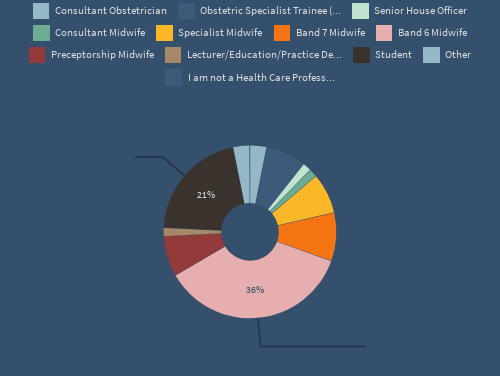
A total of 77 people attended the day. Information on their backgrounds is below.

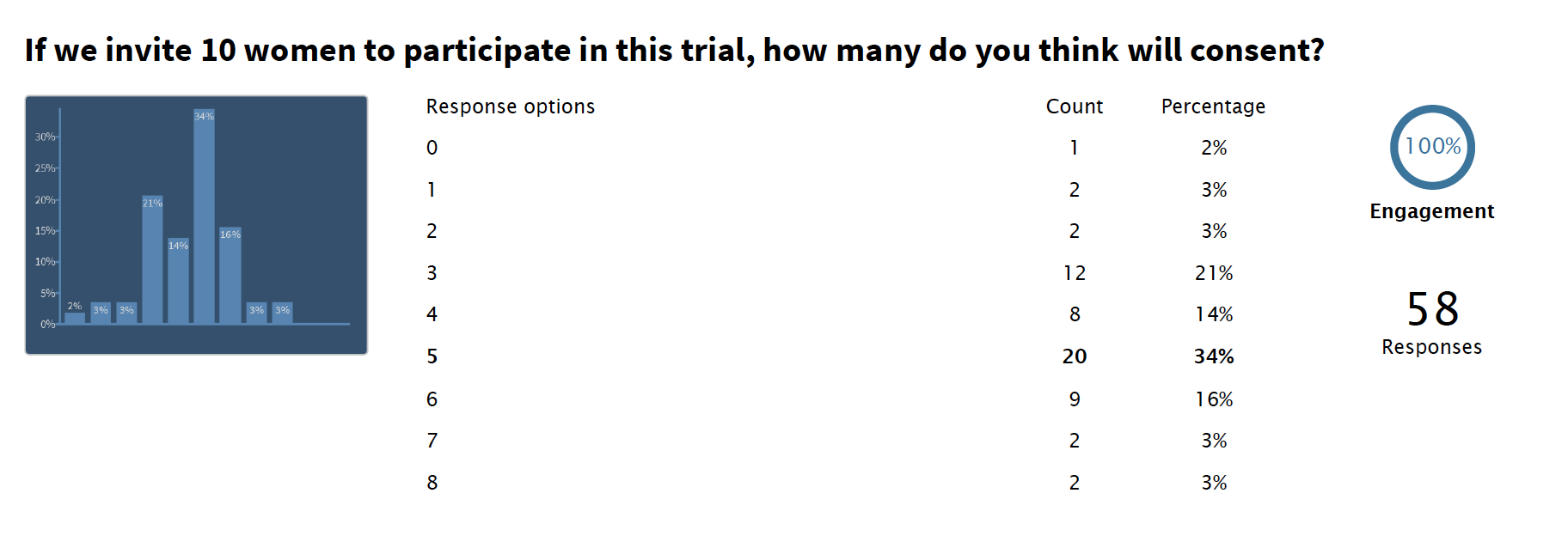
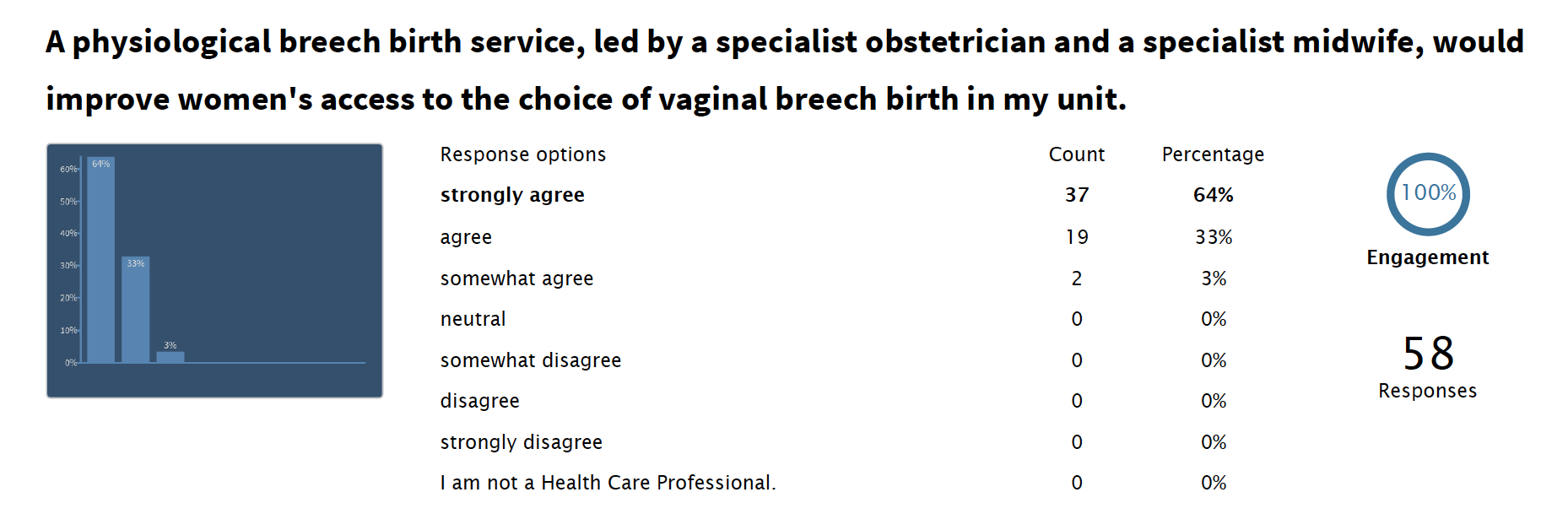
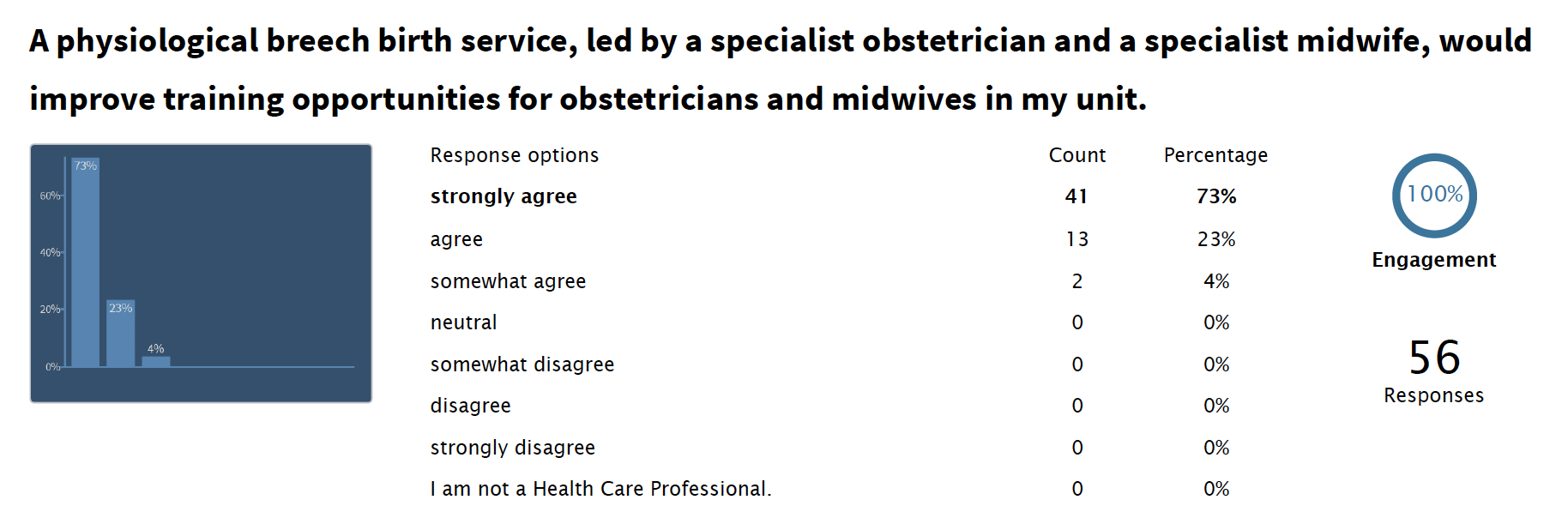
All attendees received a Description of Intervention and an explanation of the feasibility study design by the Chief Investigator. We asked health care professionals and trainees how many women they felt would be willing to participants. Their responses ranged from 0-8, with a mean of 4.3. This was slightly lower than predicted by PPI work with women.


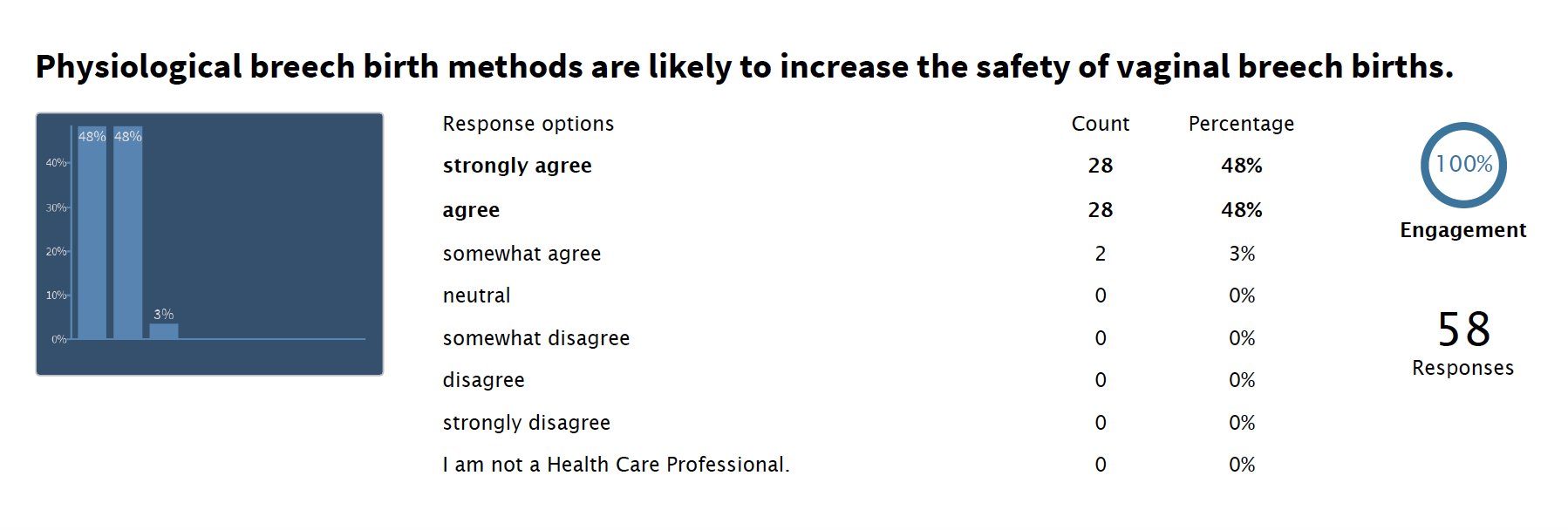
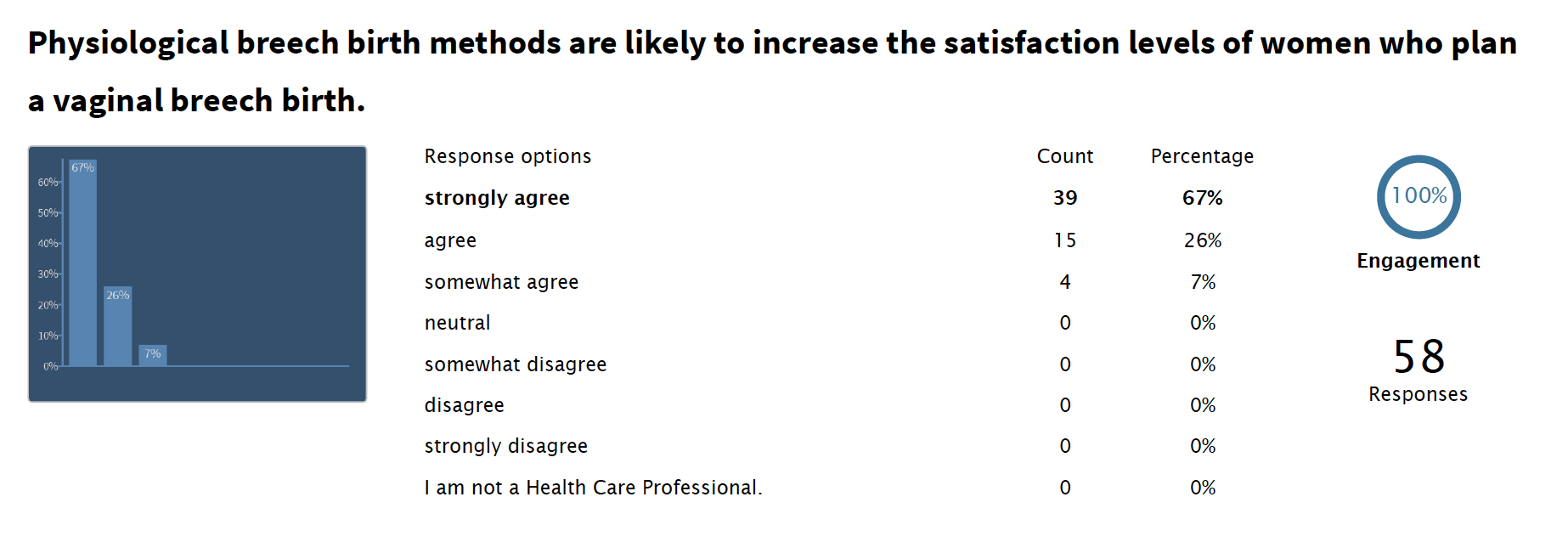
Reassuringly, after learning about physiological breech birth and the proposed feasibility study, professional opinions about the potential of the intervention appeared largely positive. But this was a self-selecting audience who chose to attend the study day and may not reflect the opinions of the wider maternity care team. And not everyone who attended the day was able to stay until the end to complete the survey.

Physiological Breech Birth care depends on a portion of health care professionals being willing to work flexibly in order to ensure experienced support at breech births. Feedback indicated that, although this was not something every practitioner was willing to do, a sufficient number to create a breech team was likely to be achievable.

Read more about health care professionals’ responses to the feasibility study design:

Written by Shawn Walker, 6 June 2019