Vaginal breech birth (VBB), where a baby is born bottom or feet first, is becoming increasingly accepted as a safe option for some women when supported by skilled professionals. However, there’s still uncertainty about what happens if labour needs to be started or “induced.” Because there isn’t much evidence about the risks and benefits of induction of labour (IOL) for breech babies, many clinicians remain cautious. This can limit women’s choices and could potentially lead to some women making unsafe decisions, especially when birth needs to be brought forward for medical reasons.
This webinar will share findings from a recent systematic review which looked at what is currently known about the safety of inducing labour for women with a breech baby at term. It compared outcomes with:
Women who went into labour spontaneously
Women who had a planned caesarean when earlier birth was advised
Women with a head-down (cephalic) baby who had labour induced
I’ll share what the research tells us, and where the gaps still are. We’ll open the conversation to explore what further research is needed, and how both women and professionals can work together to shape safer, more informed choices for breech birth in the future.
The term “women” is used here in relation to biological sex. We recognise and respect that people of diverse gender identities also give birth, and we aim to include and welcome everyone with lived experience of pregnancy and birth in this discussion.
Everyone is welcome, whether you’re a parent, birth worker, midwife, obstetrician, researcher, or simply interested in supporting informed decision making in maternity care.
Recently a new mother got in touch with the OptiBreech team and was keen to share her story and experience with others.
We welcome all feedback and experiences as they can be so useful to understand how OptiBreech research is being utilised by the public.
“We all know no two babies are the same, so it came as no big surprise that my two pregnancies should not be the same. Most notably, baby #2 decided – sometime around week 23 – to make itself comfortable in a breech position. Following an additional scan during week 33, he was settled in footling breech, and I started working on all the advised exercises to help encourage him to flip. I did daily pelvic inversions, daily pelvic tilts, had 2 appointments for an ECV with a total of 3 consultants trying their luck – but nothing would move him out of his breech presentation. Ironically, it wasn’t the bum that was the difficult part during the ECV, but rather his head did not want to move away from between my ribs. So, we faced the cold reality of what a breech presentation means these days, particularly in Scotland and at the Forth Valley Royal Hospital: doctors telling us that their best advice is to schedule an elective caesarean section, mostly determined bythe sheer lack of properly trained personnel for vaginal breech births ever since the Term Breech Trial of 2000. But no thank you! This was my last baby, my last pregnancy, and my last birth. And after my first delivery ended up rather differently from what I had anticipated (induction, epidural, forceps, episiotomy – all things I wished to avoid), this was my last and only chance to use my prior experience and for this time to “get it right”. I wanted to go into labour on my own terms. I wanted to deliver vaginally. I wanted to deliver without an epidural to be able to remain mobile… So this breech position presented an issue. And as far as we were told only 2 consultants at this hospital were experienced with vaginal breech deliveries, but their working schedules were unknown as we approached the Christmas holidays. Thankfully, the doctors allowed us plenty of time to make an informeddecision and reassured us they would support any of our choices, as long as we are fully aware of all the associated risks. My main consultant was even happy for me to go past my due date by about 12 days for a scheduled section, which was a little surprising.
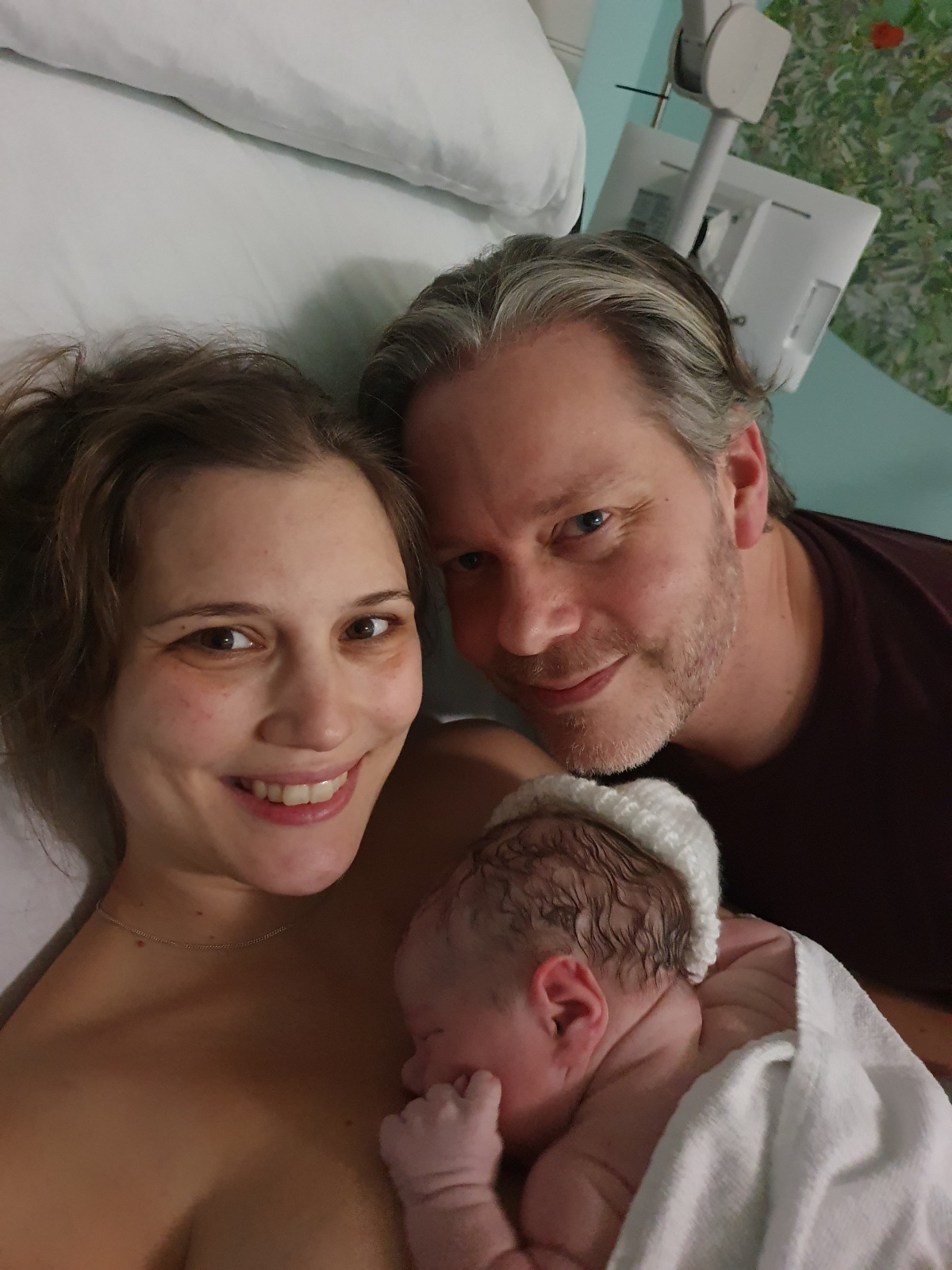
Baby Elliott
At 39 weeks I was booked in for a growth scan and to check baby’s position again. We were in complete breech and the measurements estimated a foetal birth weight of more than 4kg (weight at 39 weeks was estimated to be 3946g). Risks to baby of a vaginal delivery were highlighted again, particularly should the foot end up presenting first. By that point, I had done a ton of research and reading around vaginal breech deliveries and found the Breech Network an invaluable resource. I had also started hypnobirthing exercises to help me prepare for a calm and relaxed labouring process and birth, whichever way it would end up.
Once I approached my due date, I worked hard to help kick start my labour for two reasons: 1 – my mum was visiting from Germany for a week to hopefully meet her second grandchild, and 2 – because every day this baby was getting a little bit bigger, making a natural delivery less and less likely. I was doing hip circles on my birthing ball, lunges and squats, curb walking, sideways stair climbing, nipple stimulation and colostrum harvesting, sex, clary sage oil massages, acupressure, the lot. I was also booked in for 2 membrane sweeps, but neither happened as baby’s bum was not engaged and sitting on my pelvic brim, thereby posing a danger in case the midwife broke my waters during the sweep. However, one highly experienced midwife offered to at least do an internal examination to see whether anything was happening yet at all. She determined I was about 2-3cm dilated, could feel a foot at the cervical opening and only offered a very gentle cervical stretch, which went well. That evening I felt some tighteningsand was hopeful that this was the “push” needed to get labour started. However, the following day the tightenings had stopped almost completely, which was a little disheartening. The next day, I knew there were tightenings present, but they were rather unnoticeable, particularly during periods of activity or distraction. So at night, after my toddler was finally sound asleep, I decided to spend an hour of quiet time to observe my tightenings. I put on my hypnobirthing app and relaxation soundtrack and used the contraction timer to monitor frequency and duration of each tightening (which at this point I could only really feel when I placed my hand on my bump). As it turned out I had about 3 contractions in 10min, each lasting 80-90sec. I phoned maternity triage for advice given my situation and they asked us to come in for a check-up. Once we had childcare for the night in place, my husband, mum, and I drove to the hospital. The exam determined I was still only about 3cm dilated and that the foot was still the first presenting part. That said, the midwife said I would be okay to head home for a while longer, a decision that was quickly overturned by the consultant on shift that night who realised the risks of a cord prolapse with a footling presentation should my waters break en route or at home. So I was admitted and we spent the night – husband and mum sleeping uncomfortably in a chair and on the floor padded with jackets, and me with increasing “period pains”. By the morning I knew I was in early labour!
I met the relatively young consultant who was on shift that day and he reassured me that he would be around for the next 24 hours and that he is comfortable with vaginal breech deliveries and has carried out a few of them. After reminding us of the current risks of my baby’s presentation and estimated weight, along my decision to want to deliver vaginally, we agreed that the ultimate decision would be made at the point when my waters break – if baby’s bum is low enough I would be allowed to carry on, and if it wasn’t I would be taken to theatre for a section immediately. We agreed and all necessary precautions (cannula, meeting the anaesthesiologist) were taken. He even offered to attempt a third and final ECV to which I agreed, but it clearly did not work.
During the day, I continued to labour with the help of my breathing exercises, the hypnobirthing relaxation soundtracks, movements, a couple of Paracetamols, and some intense pelvic counterpressure applied during each contraction by my two birth partners. I was able to keep going right until the moment I felt the need to push. The consultant gave me a quick examination and determined that I was fully dilated and still with a foot coming first. During my third contraction with pushing my waters finally broke (exploded!) and his little foot popped out. Another quick examination determined that thankfully the bum was low enough for me to continue on my path and the consultant only helped deliver the second foot before remaining “hands off”. As baby descended on its own, I could feel his legs flexing as I knew breech babies do during delivery, but the pain I experienced during those movements was intense and felt like someone was tugging and pulling him, further exacerbating the pain. I was on my 4s and reminded myself of the breathing techniques I learned from my hypnobirthing practice and the research I read on the Breech Network website (down-breathing and cyclic pushing). I knew time was of the utmost essence, so I remained focussed through the pain to make each push count and to get this baby delivered as quickly as I can. Halfway through the birth I was asked to switch onto my back and to move onto another bed, a task which seemed utterly impossible at the time with the labour pains and the lack of mobility as half of my baby was already born. But the move was important to flex and deliver his head, and so everyone helped me into my new position. Once on my back I reached down and could feel my baby’s floppy body. The consultant informed me that he is going to help deliver the arms, which were stretched up by the head. He managed to get the arms out and I felt an immediate and welcomed relief of the ring of fire. This was the final moment. Time had ticked on and the largest part had yet to be born. My husband told me that during the next push the head started to emerge, but retracted back into the birth canal as the cord was wrapped around his neck 3(!!) times – no wonder he didn’t flip around!
I was asked to give a really big push with my next contraction, but because I hardly felt or noticed my contractions during the whole delivery, I instead got myself mentally and physically ready and in my own time started afinal long and strong push. Birthing the head felt like a big ‘pop’ and an immense feeling of pain relief, exhaustion, and zen.
My baby’s cord was clamped and cut straight away (apparently the cord was stretched and white/compressed during a large proportion of the birth and tore during the delivery of the head) and he was taken to the resuscitation trolley to get his breathing started. He was quite stunned, blue and floppy and it took a little while to bring him back (APGAR score of 2 at 1min – heart sounds only; 6 at 5min) but the paediatricians knew what to do and did a great job. From my waters breaking to him being fully born took a total of 11 minutes (even though it felt a lot longer to me), and he was weighed at a proud 4165g.
We stayed in hospital for about 28 hours and Elliott took his first feed on the breast after a good 6-hour recovery nap. He passed all his exams and tests and is a healthy and thriving baby.
I am so immensely grateful to have had this particular birthingexperience and I feel incredibly proud of not only what I achieved, but also for believing in myself and nature, sticking to my beliefs within the realms of safety for me and the baby, and to remain strong in the face of the potential risks. I owe a big part of this to the information available from the Breech Network and the birth preparations and positive affirmations provided by the Positive Birth Company. I don’t know how many times or how many medical staff I told that if no one is willing to give vaginal breech births a chance, how are the doctors and midwives ever going to get these skills back?”
All invited to this participatory research webinar, where we will share findings from our qualitative research and invite you to shape our interpretations!
Sharna, Cianna, their family and their midwife, Anne
In this participatory research webinar, we will share the results of two of the OptiBreech qualitative research projects. We invite all stakeholders (participants, women & birthing people, clinicians, service leaders and policy makers) to reflect on our findings with us and shape the interpretations we will summarise in our papers’ discussions.
Work will be presented by Research Assistants Honor Vincent and Alice Hodder, along with our PPIE Lead, Sian Davies. Abstracts of the two papers are below. If you have contributed to the research (clinicians and research staff), you will receive a copy of our draft paper and an invitation to make comments and/or recommendations for revisions.
If you are a stakeholder, we invite you to share your views in the meeting chat, raise them when we open the meeting for discussion or send them directly to a member of the research team.
For all sites that have expressed an interest in our planned stepped wedge trial of OptiBreech collaborative care: please include your name and hospital in the webinar chat, and we will award one site selection point for every site that participates.
Barriers and facilitators for team implementation of OptiBreech collaborative care
Introduction: Increased rates of caesarean section for breech presentation and lack of training have reduced professional experience and expertise in supporting vaginal breech birth. OptiBreech collaborative care is a care pathway that aims to enable maternal choice and improve training opportunities for maternity professionals, through dedicated clinics and intrapartum support. In feasibility work, barriers and facilitators to team implementation were observed by team members. This study seeks to describe these factors to optimise future implementation of OptiBreech collaborative care.
Methods: Semi-structured interviews were conducted with staff members at OptiBreech trial sites (17 midwives and 4 obstetricians, n=21), via video conferencing software. A Theoretical Domains Framework (TDF) was used to identify factors impacting team implementation. Themes identified in the TDF were refined in reflective discussion and grouped into key facilitators, key barriers, and dynamic factors (which span both barriers and facilitators). The interviews were then coded, analysed and interpreted according to the refined framework.
Results: The key facilitators were broadly categorised within skill development, beliefs about capabilities and social support from the wider multidisciplinary team. Key barrier categories were resources, social obstacles and fears about consequences. Dynamic factor categories were individual responsibility, training and practice.
Conclusions: While some factors affecting implementation were specific to the individuals and cultures of certain trusts, recommendations emerged from analysis that are more broadly applicable across multiple trusts. These should be considered going forward for future trust implementation in the next stage of clinical trials.
The OptiBreech Trial feasibility study: a qualitative inventory of the roles and responsibilities of breech specialist midwives
Background: The safety of vaginal breech birth (VBB) is associated with the skill and experience of professionals in attendance, but minimal training opportunities have led a to a lack of willingness to support these births. OptiBreech collaborative care is a pathway designed to support maternal choice and professional training, through dedicated breech clinics and intrapartum support. In feasibility work for the OptiBreech Trial, these were usually co-ordinated by a key midwife on the team, functioning as a specialist.
Objective: To describe the roles and tasks undertaken by breech specialists in the OptiBreech 1 study (NIHR300582).
Methods: Semi-structured interviews were conducted with OptiBreech team members (17 midwives and 4 obstetricians, n=21), via video conferencing software. Template analysis was used to code, analyse, and interpret data relating to the roles of the midwives delivering breech services. Tasks identified through initial coding were organised into five key themes in a template, following reflective discussion at weekly staff meetings. This template was then applied to all interviews to structure the analysis.
Results: Breech specialists as change agents emerged as important in multiple settings; each fulfilled similar roles to support their teams, whether this role was formally recognised or not. In this study, this role was most commonly described as fulfilled by midwives, but some obstetricians also functioned as specialists. We report an inventory of tasks performed by breech specialist midwives, organised into five themes: Care Planning, Clinical Care, Education and Training, Service Development, and Research.
Conclusions: Breech Specialists perform a consistent set of roles and responsibilities to co-ordinate care throughout the OptiBreech pathway. The inventory has been formally incorporated into the OptiBreech collaborative care intervention. This detailed description can also be used by employers and professional organisations who wish to formalise similar roles to meet consistent standards and improve care.
The @OptiBreech team are looking to collaborate with service users who can help us share results with your communities
We have talked about the importance of inclusive research and ensuring the design of studies and trials are shaped by all voices recently. It is also important to consider the dissemination of results and ensuring we reach as many different groups as possible.
Currently, for 39% of OptiBreech participants, English is not their first language. We have a significant number of participants reporting Arabic, Polish, Portuguese, Romanian, Somali, Spanish, Tamil, and Urdu as their first language, with 13% of our participants indicating they need a translator. Additionally, 10% of OptiBreech participants are aged 25 and under.
We therefore would like to reach out to members of our involvement group and previous participants, to form an OptiBreech Results Group. We want to collaborate on developing a strategy to reach as many under-represented communities as we can who may not access our news and events through website updates or traditional media.
This may include making short, self-shot videos helping to communicate the results of our research in your own words and language, especially those results that YOU feel your community will find important. We welcome your ideas on how best to identify the most appropriate outlets to reach as many demographics as we can. You will be reimbursed for any activities with a Love2Shop voucher, in line with the NIHR’s recommended payment rates (approximately £25/hour).
We believe it is important to share data and evidence so that members of the public are aware of their options. We want everyone to have the information to be able to advocate for improved care for themselves individually or alongside their local Maternity Voices Partnership organisation.
Siân Davies, Participant & Public Involvement and Engagement (PPIE) lead.
To express an interest in helping us to disseminate the results of our research with your local community, please complete this form:
In recent years we have seen the pervasive effects of health inequalities and inequities highlighted in the MBRRACE-UK reports. There has been discussion since then about ‘hard to reach groups’ and how we ensure all voices are shaping research and clinical practice. However, Dr Natalie Darko, an Associate Professor of Health Inequalities offers the perspective that actually it is more a case of research being incredibly difficult to access for a number of communities rather than those groups being hard to reach.
This is an incredibly pertinent consideration and something research teams really need reflect on when in the initial stages of designing research. We have seen a real emphasis on co-production and PPI informing projects but to truly address health disparities, it is critical to ensure underrepresented groups are included and their voices are shaping future work.
I recently met up with Victoria Walsh, chair of Wirral Maternity Voices Partnershipto discuss some of the OptiBreech Project’s upcoming work and develop an inclusive PPIE strategy. We reflected on how best to be able to engage with a number of communities who are often excluded to increase their participation. Considerations such as interpreters (in multiple languages and British Sign Language) for events (both online and in person) and translation of all participant-facing materials to address language barriers. Accessibility should be considered in terms of the physical, psychological, technological, and financial barriers to participation. Additionally, mistrust in services is often a key barrier for underrepresented groups being excluded from research and so therefore consideration of our position and power must also be central to our approach when engaging with these communities.
We are proud that in our pilot trial, 59% of participants came from non-British backgrounds and 29% were from black or brown populations. But we know there is always more to do to ensure everyone can participate in research. We look forward to continuing to work with Wirral MVP during the course of this year to be able to remove even more barriers to maintain the diversity of participation in OptiBreech research.
Siân Davies – OptiBreech Research Assistant and PPI Lead
A photograph of my not so little breech baby!
Useful References
Coe D, Bigirumurame T, Burgess M et al. Enablers and barriers to engaging under-served groups in research: Survey of the United Kingdom research professional’s views [version 1; peer review: awaiting peer review]. NIHR Open Res 2023, 3:37 (https://doi.org/10.3310/nihropenres.13434.1)
Investing in staff and their skill development will achieve the same, if not better, results and should be the priority.
This a response to a recently published report in PLOS Medicine suggesting that implementation of universal third trimester ultrasound scanning in pregnancy improves outcomes for babies and mothers.
The following contributors have approved this expression of concern:
Researchers and Clinicians:
Shawn Walker, Researcher in Residence and Honorary Consultant Midwife, Imperial College Healthcare NHS Trust
Emma Spillane, Deputy Director of Midwifery and OptiBreech Lead, Kingston Hospital NHS Trust, London
Sabrina Das, Consultant Obstetrician and OptiBreech Lead, Imperial College Healthcare NHS Trust
Philippa Corson, Consultant Obstetrician and Breech Clinic Lead, Royal London Hospital, Barts Health NHS Trust
Susan Bewley, Emeritus Professor of Obstetrics & Women’s Health, King’s College London
OptiBreech Patient and Public Involvement Leads:
UK researchers have an ethical obligation to involve service user groups in design and interpretation of research studies
Siân Davies
Nimisha Johnstone
Norfolk and Norwich University Hospital Maternity Voices Partnership Service User Representatives:
Lisa Brophy
Marion Frey-Alqurashi
Rachel Graveling
Siobhan Ridley
Evelyn Shadlock
Knights et al1 confidently demonstrate that routine third trimester, including point-of-care ultrasound (POCUS) performed by midwives, can significantly reduce undiagnosed breech presentation in labour. This is welcome, as women find diagnosis of breech presentation in labour traumatic, regardless of the outcome.2 Although the considerable psychological impacts were not discussed, all should support the plan to increase safety, choice and personalised care through better antenatal detection of breech presentation.
However, the authors then assert that, “Short-term adverse perinatal outcomes, including [neonatal unit] admission and low Apgar scores, were significantly lower for the pregnancies with diagnosed breech presentation at term following a policy for screening by either routine third trimester scan or POCUS.” This was despite no evidence given that any neonatal outcome achieved a statistically significant improvement. Indeed, hypoxic ischemic encephalopathy (HIE) increased from 0.3% to 0.4% in the St Georges University Hospital (SGH) cohort. The authors then ran Bayesian log-binomial regression models mostly using data from a previous evaluation of the same intervention on a different population (Salim et al),3 falsely concluding that there was a high probability the intervention would reduce adverse outcome rates.
Oxford’s implementation data
The publicly available data for the Salim et al study (S1 Data. Study data set)3 indicate that eight cases of serious neonatal morbidity (HIE and/or death) occurred:
In six (75%) Oxford cases, the breech presentation was identified antenally. In 1/2 (50%) undiagnosed cases, a presentation scan would not have prevented the breech labour, which occurred at 37+2 weeks gestation. In both cases of death, the breech had been diagnosed clinically and the women had been seen in breech clinic. In two additional diagnosed cases, the breech service worked exactly as it was intended; two successful ECVs were performed. Nonetheless, HIE occurred following these cephalic births.
The total potential benefit in Oxford was a reduction of two cases of HIE and two less NICU admissions with Apgar <7 at 5 minutes without HIE, i.e. 44 versus 40 neonatal composite adverse outcomes in 1052 third trimester breech presentations, at a cost of 7,673 additional scans and 65 additional ECV procedures.
Norwich charity funding
Knights et al1 do not explain that Norfolk and Norwich University Hospital (NNUH) spent £100,000 of NNUH Hospitals Charity funding4 on handheld ultrasound scanners. The results in their cohort (Table 4) indicate two fewer neonatal admissions and one less case of Apgar score <7 at 5 minutes after implementation. Neither of these would have been considered a serious adverse outcome in the Term Breech Trial5 nor PREMODA study.6 Thus, there is no causative evidence of improvement, nor is this strategy is likely to prove cost-effective for implementation at scale.
St Georges’ specialist service
Knights et al failed to even look for confounding factors, let alone control for them – a serious source of bias in retrospective studies (see item 7 in the STROBE checklist, ‘Variables’).7 Yet, during their study time frame, and known to the authorship team, SGH also participated in a prospective multi-centre evaluation of physiological breech birth training, the results of which were already published in 2021.8 Both Knights and Mattiolo report a similar number of vaginal breech births, 64 (49 before and 15 after) and 90 (37 before and 53 after) respectively. Mattiolo et al also report outcomes for actual vaginal breech births. Among births where there was no attendant who had completed the enhanced training present, the severe neonatal composite adverse outcome rate was 5/69 (7.2%). Among births attended by someone who had completed the enhanced training, in the same settings, it was 0/21 (0%).
Between 2017-2020, overlapping with the implementation of the scanning programme, a specialist clinic and intrapartum care service for women requesting a vaginal breech birth were implemented at SGH.9 After 100 doctors and midwives had received a whole day’s training, the internal guideline was updated to include a physiological breech management algorithm.10 This was incorporated into monthly mandatory training to all staff, introducing substantial changes to vaginal breech birth practice. All obstetric trainees received half-day training. New joiners received the whole-day training repeated 6-monthly. By 2019, the rate of planned VBB had increased from 1.3% to 12.3% of all births in breech presentation.11 Internal audit of this service demonstrated substantial reduction in the emergency caesarean birth rate, from 42.9% to 24.8% of all births in breech presentation.11
The specialist service at SGH was discontinued when the breech specialist midwife (Spillane) relocated in 2020 and was not replaced. Nevertheless, the potential confounding effects need to be considered. When services invest in staff skill development, those effects extend beyond each individual birth.12
A specialist intrapartum service was also implemented at Oxford during the Salim et al. study,13 with the ‘dedicated on-call team’ for vaginal breech births publicly advertised on the hospital website.14 This is a significant difference in practice compared to most NHS units (except OptiBreech sites). Among the breech presentations >37 weeks with labour, planned vaginal breech births increased from 7.4% (12/162) to 17.6% (21/98) after the introduction of universal scanning. The provision of this team also appeared to improve the safety of the actual vaginal breech births that occurred.
Admission to NNU
Apgar <7 at 5
HIE
Perinatal mortality
Planned VBB
2/16 (12.5%)
0/16 (0%)
0/16 (0%)
0/16 (0%)
Unplanned VBB
7/42 (16.7%)
3/42 (7.1%)
5/38 (13.2%)
2/42 (4.8%)
Secondary analysis of publicly available data from Salim et al
The differences between planned and unplanned VBB are comparable to Mattiolo et al.8 Could the authors use these data in Bayesian log-binomial regression models to demonstrate the beneficial effect of implementing breech birth teams? We cannot assume that similar results would occur in settings that do not offer a similar service.
Summary
The opportunity to access a third trimester presentation scan remains important, especially for women planning an out-of-hospital birth. But women find it psychologically distressing and dehumanising to be unable to access skilled support for a vaginal breech birth, both antenatally and in labour.15–17 Unless an evidence-based plan for improving this support is in place, matters will never change. When we prospectively evaluated the implementation of breech teams,15 one in five participants transferred from their original booking hospital to access supportive care for a vaginal breech birth.18 Some of these women came from SGH (since this VBB service is no longer available) and NNUH (approximately three hours car drive from the nearest OptiBreech site). Further unanticipated risks are introduced for women whose babies are diagnosed as breech but who cannot access their preferred mode of birth locally. More inequalities are created among women for whom the required travel and self-advocacy is impossible.
Determining which interventions improve clinical and cost-effectiveness outcomes for term breech pregnancies requires properly powered, prospectively registered, randomised controlled trials with publicly available, pre-specified protocols and anonymised data sets. It is extraordinary that £100,000 of charitable money was spent on equipment alone, outside the context of carefully planned research, and without service user involvement in priority setting. This has merely resulted in a poor-quality publication and plenty of mass media soundbites.4,19,20 Currently, many NHS sites lack the funding for trained staff to offer all needed care options (ECV, VBB and ELCB) that are currently recommended in RCOG21 and NICE guidelines.22,23 Investing in staff and their skill development will achieve the same, if not better, results and should be the priority.
Investing in staff and their skill development for vaginal breech births will achieve the same, if not better, results than universal third trimester ultrasound scans and should be a priority. @optiBreech@MidwifeSpillanehttps://t.co/AVmvWbCFsJ
Knights S, Prasad S, Kalafat E, et al. Impact of point-of-care ultrasound and routine third trimester ultrasound on undiagnosed breech presentation and perinatal outcomes: An observational multicentre cohort study. PLoS Med. 2023;20(4):e1004192. doi:10.1371/journal.pmed.1004192
Lightfoot K. Women’s Experiences of Undiagnosed Breech Birth and the Effects on Future Childbirth Decisions and Expectations. DHealthPsych. University of the West of England; 2018. http://eprints.uwe.ac.uk/33278
Salim I, Staines-Urias E, Mathewlynn S, Drukker L, Vatish M, Impey L. The impact of a routine late third trimester growth scan on the incidence, diagnosis, and management of breech presentation in Oxfordshire, UK: A cohort study. Myers JE, ed. PLoS Med. 2021;18(1):e1003503. doi:10.1371/journal.pmed.1003503
Hannah ME, Hannah WJ, Hewson SA, Hodnett ED, Saigal S, Willan AR. Planned caesarean section versus planned vaginal birth for breech presentation at term: a randomised multicentre trial. The Lancet. 2000;356(9239):1375-1383. doi:10.1016/S0140-6736(00)02840-3
Goffinet F, Carayol M, Foidart JM, et al. Is planned vaginal delivery for breech presentation at term still an option? Results of an observational prospective survey in France and Belgium. Am J Obstet Gynecol. 2006;194(4):1002-1011. doi:10.1016/j.ajog.2005.10.817
Vandenbroucke JP, Von Elm E, Altman DG, et al. Strengthening the Reporting of Observational Studies in Epidemiology (STROBE): explanation and elaboration. PLoS Med. 2007;4(10):1628-1654. doi:10.1371/JOURNAL.PMED.0040297
Mattiolo S, Spillane E, Walker S. Physiological breech birth training: An evaluation of clinical practice changes after a one‐day training program. Birth. 2021;48(4):558-565. doi:10.1111/birt.12562
Spillane E, Walker S. Case study supporting continuity of care models for breech presentation at or near term. Pract Midwife. Published online 2019:36-37.
Spillane E, Winstanley C, Swer M. Breech. St George’s Hospital Practice Guideline; 2019.
Spillane E. St George’s Breech Clinic – Results. In: Physiological Breech Birth Training [Online]. Breech Birth Network; 2020. Accessed April 18, 2023. https://vimeo.com/486516151
Walker S, Parker P, Scamell M. Expertise in physiological breech birth: A mixed-methods study. Birth. 2018;45(2):202-209. doi:10.1111/birt.12326
Dasgupta T, Hunter S, Reid S, et al. Breech specialist midwives and clinics in the OptiBreech Trial feasibility study: An implementation process evaluation. Birth. 2022;00:1-10. doi:10.1111/birt.12685
Morris SE, Sundin D, Geraghty S. Women’s experiences of breech birth decision making: An integrated review. Eur J Midwifery. 2022;6(January):1-14. doi:10.18332/EJM/143875
Petrovska K, Watts NP, Catling C, Bisits A, Homer CS. ‘Stress, anger, fear and injustice’: An international qualitative survey of women’s experiences planning a vaginal breech birth. Midwifery. 2017;44(0):41-47. doi:10.1016/j.midw.2016.11.005
Walker S, Spillane E, Stringer K, et al. The feasibility of team care for women seeking to plan a vaginal breech birth (OptiBreech 1) – an observational implementation feasibility study in preparation for a pilot trial. BMC Pilot & Feasibility Studies. 2023;In Press.
Impey L, Murphy D, Griffiths M, Penna L, on behalf of the Royal College of Obstetricians and Gynaecologists. Management of Breech Presentation. BJOG. 2017;124(7):e151-e177. doi:10.1111/1471-0528.14465
Nimisha Johnstone, @OptiBreech PPIE lead, shares women’s views of why it’s important we help babies to start breathing with the cord intact when needed. @NIHRinvolvement
In autumn/winter 2022, the OptiBreech research team spent time developing a research proposal for a study to investigate the implementation of bedside resuscitation for breech babies who require breathing assistance at birth. In my role as a PPI leader with the OptiBreech trial, I sought input from breech presenting mothers and birth workers through small group interviews.
I am the mother of a baby who presented breech at the end of pregnancy. I planned a vaginal breech birth and agreed to allow my birth data to contribute to the OptiBreech study in 2021. Since then, I have become involved in enabling other mothers of breech-presenting babies to become involved in shaping the evolution of this research.
Birth Experience
I spoke with 7 women with a breech presentation at term and 1 doula over video calls in groups of 2. We started by sharing our breech birth experiences and the themes of lack of choice and lack of confidence in birthing professionals echoed across all interviews. The need for support towards a physiological breech birth was not met in many of the experiences resulting in a lack of choice and feelings of coercion towards a c-section. They reported a confidence in their body’s own ability to birth breech, but a lack in the birthing professional’s ability to confidently support them.
The mothers were aware of optimal cord clamping and the benefits, however, similar to the women in our OptiBreech studies, they had reported feeling let down because the cord was clamped immediately, despite stating their wishes on their birth plan. They also reported not being made informed as to why the cord was clamped immediately.
Some of the mothers also reported their baby being taken to a resuscitation table out of sight without being informed. Seeing their baby on the resuscitation table led to feelings of self-doubt, guilt and questioning whether they had made the right choices.
Is this research proposal important and relevant?
The research proposal aims to answer two questions:
What are the outcomes for mother and baby for term breech pregnancies within the services offering optibreech care?
And can bedside stabilisation and/or resuscitation following vaginal breech births be successfully implemented with provision of a bedside unit and staff training?
About 1:5 babies born after a vaginal breech birth need some help to start breathing, and about 1:10 are transferred to a neonatal intensive care unit after the birth. We feel we can reduce this to 1:5 (the UK national average for all births) if our specialist teams are able to provide help next to the mother. This will result in better long-term outcomes for the baby. Families have better experiences if they are not separated from babies, during resuscitation or after. Women in our OptiBreech studies have reported feeling let down because in most births where the baby appeared to need help, the cord was cut immediately, despite OptiBreech and UK Resuscitation Council guidance.
All mothers strongly support the research proposal and believe optimal cord clamping and keeping the baby near to them immediately post-birth is hugely important. Some mothers reported feelings of confusion as to why this did not happen in their experience because they felt it was quite obvious that babies should be near their mother immediately post-birth, therefore were supportive of having a bedside unit so that they could always see their baby if they needed resuscitating.
Mothers reported doing more research on neo-natal death rates resulting in them feeling less informed around the need for resuscitation. Sharing this scenario before birth would help to keep the mother informed around a potential post-birth scenario as well as the need to keep the mother informed in real-time should a resuscitation unit be needed.
Language
The importance of the use of language was highlighted, in particular the use of the word “resuscitation” did not resonate well with some of the mothers as it can lead to negative connotations such as not being able to breathe or death. There was an understanding that the resuscitation table is also used for clearing the lungs and or for simply checking the baby and therefore the word “resuscitation” should be carefully considered when speaking to mothers to avoid panic. “Transition” was one replacement word suggested, however, there were mixed responses to this word as some felt it wasn’t specific enough and needed explaining whereas others responded positively saying it’s a mid-way point. There will need to be further consideration around the use of language and the most appropriate terminology to use.
Thank You
We ended the session by sharing our motivation for joining this PPI meeting and learnt that mothers wanted to be a part of the driving force behind normalising physiological breech birth, and to avoid other mothers and birthing people feeling like they have no other option.
I would personally like to say a huge thank you to those who participated in this PPI meeting, it was a pleasure meeting each of you. We value your thoughts and comments to improve on the design of our study to better our research.
We are in the process of developing a research proposal for a feasibility study to investigate the implementation of bedside resuscitation for breech babies who require breathing assistance at birth.
Research indicates that providing this immediate care next to mothers/birthing people reduces parental distress and is found to be more favourable by clinicians due to improving communication with parents while they provide care.
The purpose of this group session is to gain insight and feedback regarding our research aims and design from stakeholders to ensure the research is the next piece of the puzzle in improving breech care, designed appropriately, and acceptable to women/birthing people.
We have scheduled this meeting for 90mins to ensure everyone has enough time to discuss the proposal and ask any questions and we will also provide an optional short survey for anyone to provide any additional feedback if they were not able to during the meeting.
The meeting will be held on Sunday 30th October 10am – 11.30am via Microsoft Teams. You can attend the meeting for the full 90mins or attend like a drop in session.
We look forward to meeting with you and hearing your thoughts.
Plain English summary of the research (limit 400 words):
OptiBreech Care is a specialist care pathway for women whose baby is positioned bottom-down (breech) at the end of pregnancy. Our team previously studied how hospitals provide team care when a woman requests a vaginal breech birth to make sure it was possible. In this model, women found it easier to plan their choice of a vaginal breech birth or a pre-labour caesarean birth. Fewer women had emergency caesarean births, and outcomes for babies were at least as good as standard care. OptiBreech teams found one aspect difficult: leaving the umbilical cord attached if the baby needs help to start breathing. Team members told us this is challenging to achieve because they do not have appropriate equipment and training.
About 1:5 babies born after a vaginal breech birth need some help to start breathing, and about 1:10 are transferred to a neonatal intensive care unit after the birth. We feel we can reduce this to 1:5 (the UK national average for all births) if our specialist teams are able to provide help next to the mother. This will result in better long-term outcomes for the baby. Families have better experiences if they are not separated from babies, during resuscitation or after. Women in our OptiBreech studies have reported feeling let down because in most births where the baby appeared to need help, the cord was cut immediately, despite OptiBreech and UK Resuscitation Council guidance.
We aim to learn how to get optimal cord management right for every birth, how much it will cost and how it may improve outcomes for babies if we do this. We will supply one site with bedside trolleys and team training; another site will use trolleys they already have, with additional support; all thirteen remaining sites will continue to try to implement the recommendations with what they already have. We will observe the process for 12 months initially, during which we would expect 205 planned breech births to occur. We will conduct interviews with staff, parents and birth supporters following births where babies have needed support, to understand how this is working, or not.
By studying the process within small teams, who care for a population at higher risk of needing assistance to begin breathing at birth, we will be able to study and share insights that can improve the process for all teams, across the UK population of term births. We will share our results in scientific papers and a toolkit. Our research team includes a service user who has planned an OptiBreech birth, who will help us to involve other service users in shaping the research and to communicate the results of the research to a wide audience.
Help us get it right, Wednesday 19th January 2022, 12:00-13:00. Are we accurately reflecting your views on breech specialist midwives and clinics?
We would like to invite women, birthing people and their families who have experienced a breech pregnancy at term to attend an online focus group discussion on Wednesday 19th January 2022, 12:00-13:00 to be conducted via Microsoft Teams. Anyone with an interest and experience of breech pregnancy can participate.
The purpose of this meeting will be to get your perspective on the work we have been doing so far.
We have been working on analysing data from qualitative interviews held with OptiBreech 1 participants. To date, we have interviewed 15 women purposefully sampled to reflect various OptiBreech sites, mode of births, and outcomes. Our main objective was to understand what makes the OptiBreech intervention acceptable (or not) to women.
The key themes that we have found are:
Access to skilled breech care: Vaginal breech birth as a viable and safe option is still unknown to many, and lack of specialists reduced equity of access. Women who were referred to a specialist at one of the OptiBreech sites or were already receiving care at a study site found it easy to access and participate in their care. Women who had to transfer care from another hospital or find an OptiBreech site themselves had a difficult time doing so, often requiring increased effort, multiple trips, time off work etc.
Balanced information: Women really appreciated being provided balanced information on the safety and risks of vaginal breech birth vs. caesarean section including possible complications and how to manage them. This enabled them to make autonomous informed decisions and increased self-efficacy and confidence, not only in themselves but also in the breech specialist midwife. Conversely, when women had to do this research themselves because they were not getting cohesive information from the healthcare professionals, this was seen as a burden and sometimes women were made to feel pressure to choose caesarean section as the ‘safe’ choice.
Shared responsibility: Women often felt emotional burden including feelings of stress, judgement, and guilt because of the choices they had made to have a vaginal breech birth, both from family and friends, as well as other healthcare professionals. Speaking with and being cared for by the OptiBreech specialist midwife helped ease this emotional burden and gave the women confidence in their choices.
Team dynamics: We found that women had placed an enormous amount of trust and confidence in the breech specialist midwife which extended to the rest of the team, attributed to previous experience, skills and knowledge. Although women did not know all the members of the team, the trust and confidence was extended to them because of shared responsibility and training requirements needed by all OptiBreech team members.
We need your input on our findings and invite your opinions on whether these findings are relevant to you, if we have interpreted them correctly, or if we have missed any important factors in what makes OptiBreech an acceptable intervention. At the meeting we will present a short summary of our findings so far, and then have an open discussion to hear any thoughts, opinions, or questions you may have.
The meeting will be held on Wednesday 19th January 2022, 12:00-13:00 via Microsoft Teams.





 OptiBreech